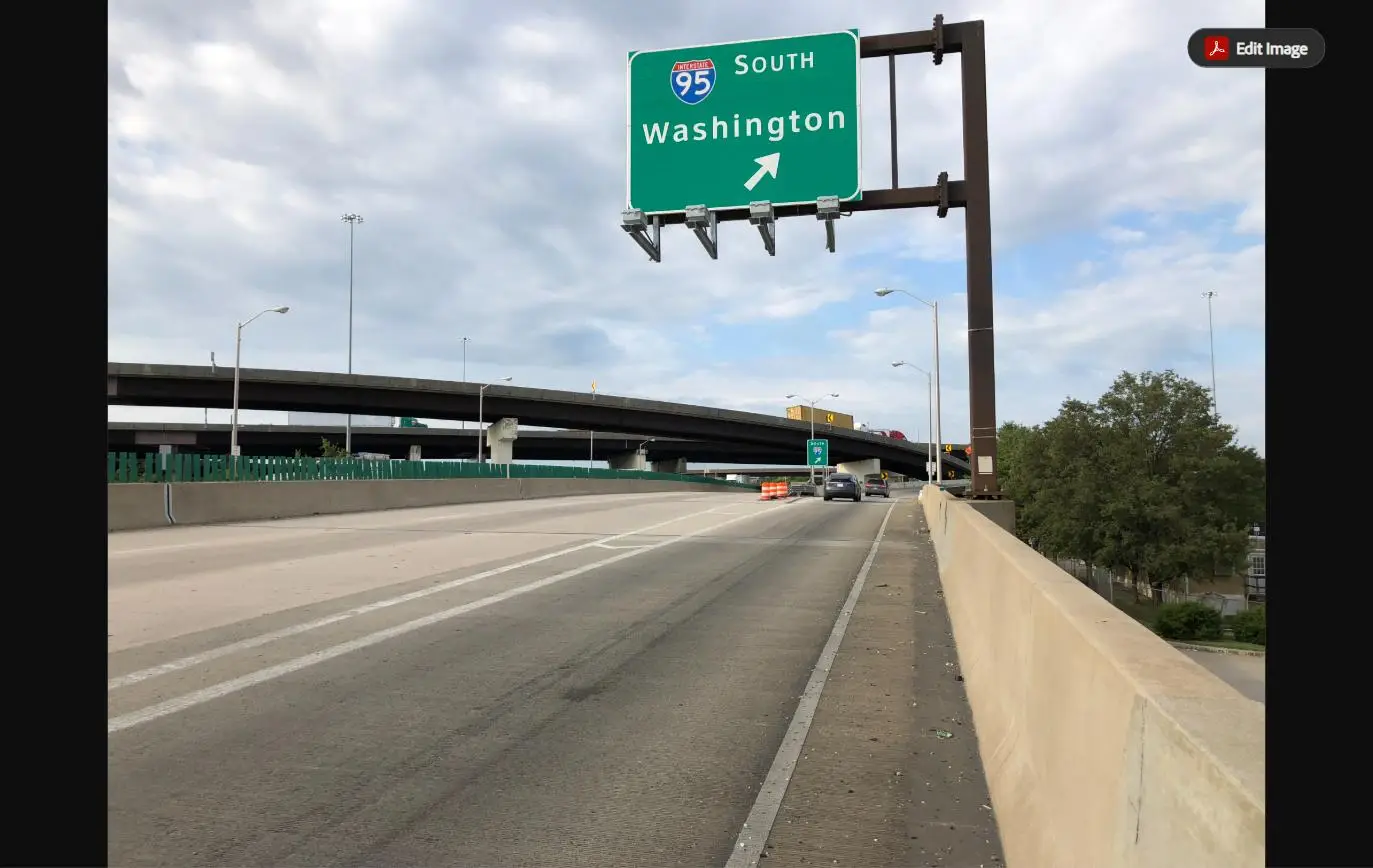
On Interstate 270 in Montgomery County, Maryland, another driver forced Eva Marie Gardner off the road and rushed toward her car. Gardner, a Virginia resident carrying under a valid Virginia concealed handgun permit, displayed her firearm to make him stop advancing. He backed off. Maryland prosecutors charged her anyway, for carrying a handgun without a Maryland permit, a textbook case of concealed carry reciprocity Maryland does not extend to any other state. A jury convicted her. In April 2026, the U.S. Supreme Court declined to hear her appeal, leaving the conviction, and Maryland’s refusal to recognize any other state’s carry permit, fully intact.
That case is not a hypothetical for anyone commuting through the DC-Maryland-Virginia region. It is the clearest illustration on record of what happens when a permit that is perfectly valid in one jurisdiction crosses into another that does not recognize it, and it happened on a highway that thousands of Northern Virginia and DC-area commuters drive every week.
Why the generic reciprocity map fails you here
Most concealed carry sites run some version of a national reciprocity map, a color-coded chart of which states honor which permits. For most of the country, that map is genuinely useful. For the DMV, it undersells the problem. Two of the three jurisdictions you can cross in a single afternoon, Maryland and DC, do not participate in reciprocity at all, by anyone’s permit, under any circumstances. The third, Virginia, currently recognizes broadly, but that is actively changing under a law signed in April 2026. This is one of the only places in the country where a fifteen-minute drive can take you through a no-reciprocity state, a no-reciprocity federal district, and a state mid-overhaul of its own recognition rules.
Maryland: no reciprocity, and it is not an oversight
Maryland law does not merely decline to honor specific states, it does not authorize the state to enter reciprocity agreements with anyone. The Maryland State Police have said this directly: no out-of-state handgun carry permit is recognized, period, and there is no mechanism for one to become recognized short of a change in state law. Applications go through the MDSP Wear and Carry Permit portal. If you are carrying in Maryland, wearing, carrying, or transporting a handgun on your person, you need a Maryland Wear and Carry Permit. Nothing else substitutes for it, no matter how strong your home-state permit is.
Maryland is shall-issue: the old “good and substantial reason” requirement was struck down after the Supreme Court’s Bruen decision and is no longer enforced. But shall-issue only helps if you actually hold the Maryland permit. As of 2026, getting one means a 16-hour state-approved training course, fingerprinting and a background check, a $125 initial fee ($75 to renew), and a processing window that can run up to 90 days. A first permit runs two years, plus the months until your birth month; renewals then run three years. Renewal is lighter than the initial application: an 8-hour course rather than the full 16, and no new fingerprints, provided you renew before the permit lapses. Let it expire and you start over as a new applicant, full 16 hours and prints included.

Gardner v. Maryland matters because it closes off the argument that a valid out-of-state permit, plus a clear self-defense justification, might create some protection Maryland law does not otherwise grant. The Supreme Court’s denial leaves that door shut. If you are not a Maryland permit holder, you are not authorized to carry in Maryland, full stop.
One distinction worth knowing: federal law (18 U.S.C. § 926A, part of the Firearm Owners Protection Act) protects interstate transport of an unloaded, cased firearm, inaccessible from the driver’s compartment, if you are legal at both your origin and destination. That protection covers a locked case in your trunk on a straight drive through. It does not cover a loaded handgun on your person or within reach, and it does nothing for a defensive display like Gardner’s. Transport and carry are legally different acts, and confusing them is exactly what turns a lawful road trip into a criminal charge.
Virginia: broad today, rewritten by the end of 2027
Virginia is the only one of the three that recognizes outside permits at all. It is a shall-issue state, and under the statute in effect right now it recognizes a valid concealed handgun permit or license from every other U.S. state, for holders 21 and over, with no separate agreement required. If you are driving into Virginia from a state with a permit, current law honors it. Note that recognition is the only area where Virginia is the loose one here: the 2026 session also brought a ban on assault firearm sales, a 15-round magazine limit effective July 1, 2026, and a prohibition on firearms inside buildings at public colleges. Broad reciprocity does not mean broad permissiveness.
That is changing, and the timeline is unusually messy. Governor Spanberger signed Chapter 879 in April 2026, rewriting how Virginia recognizes other states’ permits. Starting July 1, 2027, blanket recognition is replaced with a “substantially similar” test, another state’s permitting standards have to measure up to Virginia’s before that state’s permits are honored. Complicating things further, the same law directs Virginia’s Attorney General to review existing reciprocity recognition and revoke it for any state that fails the new test, by December 1, 2026, months before the new legal standard that defines “fails” actually takes effect. That sequencing is odd on its face, since the review runs against a standard that does not formally take effect until the following July. How it plays out in practice is unresolved as of this writing. The Department of State Police is required to publish the qualifying-state list on its website, so that page is the one to watch.
The same law closes a second door that gets overlooked. Once the new provisions take effect, a Virginia resident can no longer rely on an out-of-state permit to carry concealed in Virginia, active-duty service members and their spouses excepted. If you live in Virginia and have been carrying on a non-resident permit from another state, you will need a Virginia resident permit.
What to actually do with this: if you carry into Virginia on an out-of-state permit, do not treat today’s broad recognition as permanent. Check the Virginia State Police reciprocity page before any trip between now and mid-2027, and watch specifically for Attorney General announcements after December 1, 2026, since those could narrow the list before the statute itself changes.
Washington, DC: shall-issue for itself, closed to everyone else
DC occupies its own category. The Metropolitan Police Department issues concealed carry licenses on a shall-issue basis, to both residents and non-residents, if you qualify (21+, a registered pistol, completed training, and a background check that clears you as a “suitable” person). But DC does not recognize a carry license from any other jurisdiction, not Maryland’s, not Virginia’s broad-recognition permit, not anyone’s. The only way to carry in DC is to hold a DC-issued license yourself. Non-residents who regularly work or run a business in the District can apply for a DC non-resident permit, but a Virginia commuter driving through with no DC ties has no path to lawful carry there short of that process.
Open carry is not an alternative either, it is prohibited outright in DC for civilians. And DC’s list of restricted locations, covered in more depth on our no-carry-zones guide, layers additional restrictions on top of the licensing requirement itself.
The actual commuter playbook
Most guides stop at “know the law.” Here is what that means for specific, common DMV routes:
- Living in Northern Virginia, working in DC: your Virginia permit does not travel with you across the river. Either don’t carry on the commute, or go through DC’s non-resident licensing process if you have a qualifying work connection to the District.
- Living in Virginia, visiting family in Maryland: this is the Gardner scenario exactly. Your Virginia permit is worthless once you cross into Maryland. Leave the handgun secured at home, or complete Maryland’s own Wear and Carry Permit process if this is a regular trip.
- Driving through Maryland to somewhere else (Pennsylvania, Delaware, points north): FOPA’s transport protection can cover you, unloaded, cased, inaccessible from the driver’s seat, if legal at both ends of the trip. It will not cover a loaded gun in the console or anything worn on your body.
- Taking Metro across DC-MD-VA lines: see our dedicated public transit carry laws guide, transit adds its own layer on top of the jurisdiction you’re physically in.
- A weekend day trip that touches all three: plan around the strictest jurisdiction on your route, not the most permissive one. One stop in Maryland or DC without the right local permit undoes any protection you had in Virginia.
FAQ
Does a Virginia permit ever work in Maryland or DC? No. Neither jurisdiction recognizes any out-of-state permit, Virginia’s broad-recognition status is one-directional and does not create a reciprocal agreement.
If Virginia recognizes my state’s permit today, will it still in 2027? Not automatically. Chapter 879 replaces blanket recognition with a state-by-state “substantially similar” standard starting July 1, 2027, and the Attorney General’s review of existing states begins even earlier, by December 1, 2026.
Can I just keep my gun locked in the trunk through Maryland? That is closer to legal than carrying it, under FOPA’s transport protection, but it only holds if the firearm is unloaded, cased, and inaccessible from the passenger compartment, and if you are legally allowed to possess it at your origin and destination. It is a transport rule, not a carry rule, and it will not protect a defensive use.
What actually happened to Eva Marie Gardner? She was convicted of carrying a handgun without a Maryland permit after displaying it in self-defense during a roadside confrontation on I-270. She received a suspended sentence and probation. The Supreme Court denied her petition for review in April 2026, so the conviction, and Maryland’s no-reciprocity rule as applied to her situation, stands.
Legal note
This is general legal education, not legal advice. Reciprocity status in this region is actively changing, Virginia’s law alone has two more milestones between now and mid-2027. Verify current status directly with the Maryland State Police, DC Metropolitan Police Department, or Virginia State Police before any trip, and consult an attorney for your specific situation.


Comments are closed