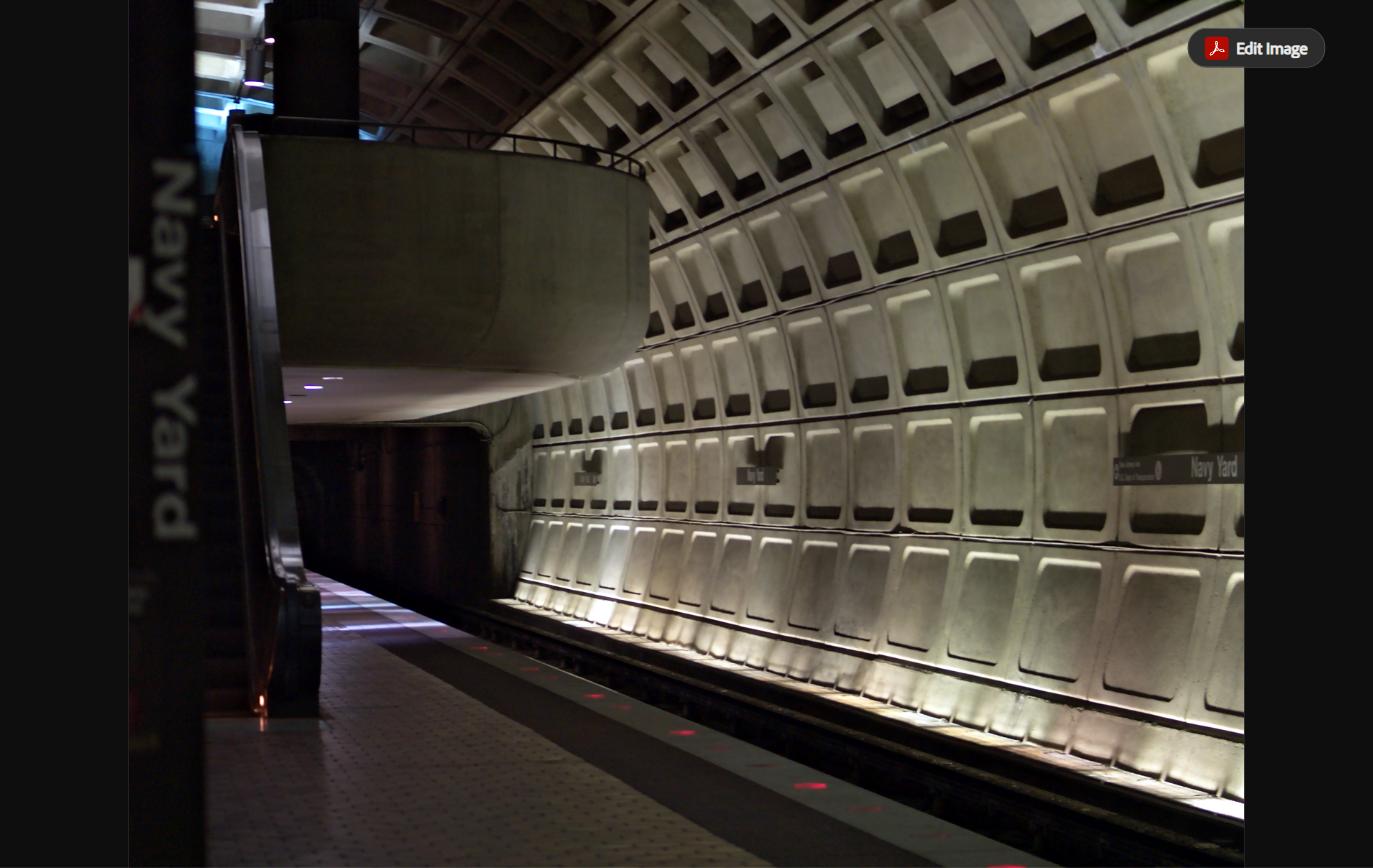

If you carry daily and your routine includes a bus, subway, or commuter rail, you’ve probably run into this question and found conflicting answers. That’s not you missing something, transit carry is genuinely one of the messiest areas of concealed carry law, because the rule that applies isn’t always the one you’d expect.
Unlike most locations, where “check state law” gets you 90% of the way there, transit systems often answer to a different authority entirely, a regional transit agency, a separate state statute, or in some cases, whichever city or state the train happens to be passing through at that moment.
Why transit is its own legal category
Most local carry restrictions trace back to either state law or city ordinance. Transit systems complicate that picture because many of them are run by regional or multi-state authorities that don’t map cleanly onto either category. Three patterns show up repeatedly:
- The transit system defers entirely to state/local law and has no rule of its own, meaning legality depends on whatever jurisdiction the train is in right now.
- The transit system is explicitly named in state statute as a no-carry zone, regardless of what would otherwise be legal at that location.
- A regional authority operates without its own firearms policy, deferring to whichever jurisdiction’s law is currently in effect along the route.
What to check before you carry on transit
- Is the system state-run, city-run, or a multi-jurisdiction authority?
- Is the system named specifically in state statute, or does it default to “follow local law”?
- Does the route cross jurisdiction lines, and does legal status change mid-route?
- Are buses and subway/rail treated differently within the same system?
- Is there posted signage, and does it carry actual legal weight in your state?
City-by-city snapshot
Maryland (MTA, bus, Light Rail, Metro Subway, MARC): Maryland law explicitly prohibits firearms aboard any vehicle or inside any building under Maryland Transit Administration control, codified directly in the Transportation Article (§ 7-705(b)(6)). This is a specific statutory prohibition, not a matter of interpretation.
Washington, DC (WMATA / DC Metro): DC Code § 7-2509.07 explicitly prohibits carrying a licensed pistol on any “public transportation vehicle,” and the statute specifically defines that term to include DC Circulator buses, DC Streetcar, MetroAccess vehicles, Metrobus, and Metrorail trains by name. The prohibition is at § 7-2509.07(a)(6), with the definition at (g)(3), and violations carry a fine or up to 180 days. It is also under active litigation. Four license holders sued the District in 2022 in Angelo v. District of Columbia, arguing Metro should not count as a sensitive place. The district court never reached that question: it dismissed the case for lack of standing. On July 7, 2026, the D.C. Circuit reversed that dismissal and sent the case back, holding the plaintiffs had shown a real injury in the added cost of avoiding transit. The ban remains in force and enforceable today, but its constitutionality has not been decided on the merits, and the case is live again.
New York City: subways, buses, and commuter trains are named directly in state law as “sensitive locations” under N.Y. Penal Law § 265.01-e, with felony-level penalties. In Frey v. City of New York, decided September 19, 2025, the Second Circuit upheld the subway and Metro-North restrictions, along with Times Square, as consistent with a historical tradition of regulating firearms in crowded places. That ruling affirmed the denial of a preliminary injunction rather than deciding the merits outright, but the restrictions stand and are enforced.
Chicago (CTA and Metra): Illinois law (430 ILCS 66/65(a)(8)) prohibits licensees from carrying on any bus or train paid for even partly with public funds, which covers CTA and Metra. Note the statutory exception: the ban does not reach a firearm that is unloaded and stored in a case, so transporting is treated differently from carrying. In 2024 a federal district judge ruled the ban unconstitutional as applied to the named plaintiffs, but the Seventh Circuit reversed in Schoenthal v. Raoul on September 2, 2025, calling the restriction comfortably situated in a long practice of limiting firearms in crowded, confined places. The Supreme Court declined to hear the appeal in April 2026, so the ban is settled law in Illinois.
What actually happens if you’re carrying somewhere transit prohibits it
- Best case: you’re asked to leave or secure the firearm off-property, particularly in systems where the prohibition is closer to policy than statute.
- More serious case: citation or misdemeanor charges, common where the prohibition is written into general trespass or weapons-carry law.
- Worst case: felony charges, the explicit reality in states like New York, where transit is named as a sensitive location with felony-level enforcement.
FAQ
Is carrying on Amtrak legal? Amtrak is a common carrier with its own federal regulations, separate from local transit authority rules, generally, firearms are permitted only in checked baggage with advance notice, not on your person or in your carry-on.
Does a rule change if my transit ride only briefly enters a restrictive jurisdiction? Assume yes. “I was only passing through” is not a recognized legal defense in any of the jurisdictions covered above.
Do I need to declare that I’m carrying if stopped for an unrelated transit violation? This varies by state and is separate from where you’re legally allowed to carry. Several states (Maryland among them) have no duty-to-inform requirement, but that doesn’t change whether you’re allowed to be carrying on that system in the first place.
Legal note
This is general legal education, not legal advice. Transit and local carry rules are actively changing through ongoing litigation in multiple states, so verify current law directly with the relevant transit authority and state statute before relying on anything here. Primary sources for this guide: Md. Transportation § 7-705; D.C. Code § 7-2509.07; Angelo v. District of Columbia, D.C. Cir. No. 24-7127 (July 7, 2026); Frey v. City of New York, 2d Cir. No. 23-365 (Sept. 19, 2025); and Schoenthal v. Raoul, 7th Cir. (Sept. 2, 2025).


Comments are closed