
Virginia Concealed Carry Laws 2026: What Changed With Reciprocity (And What It Means for Maryland Carriers)

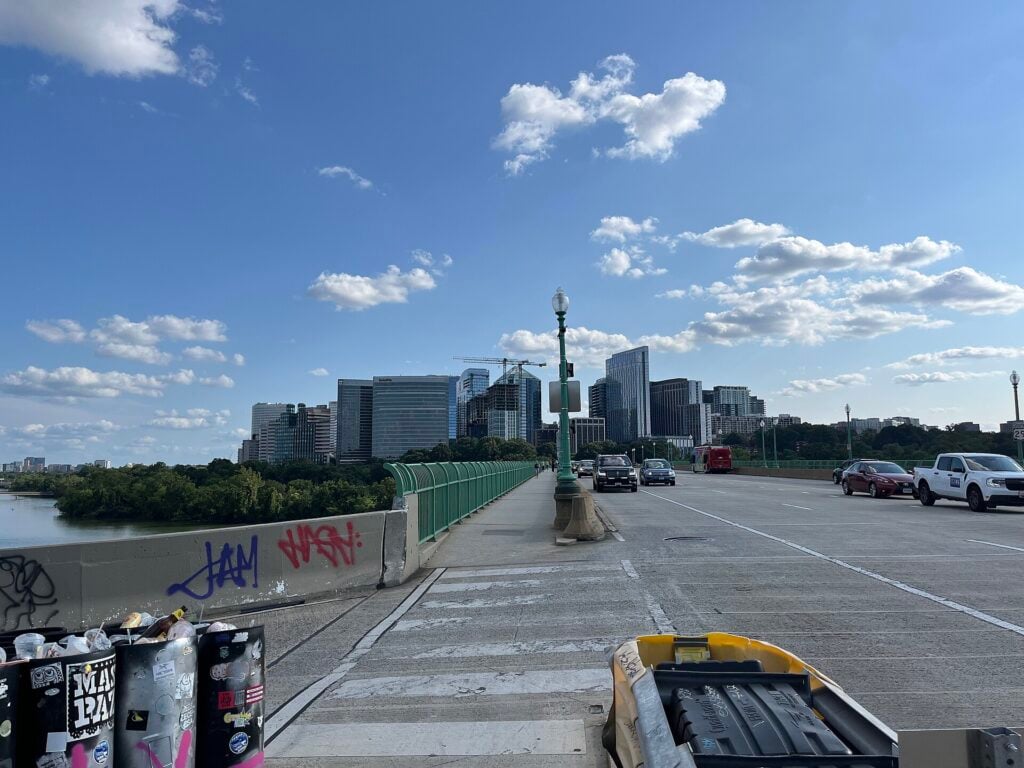
If you carry in Maryland or DC and cross the Potomac for work, family, or a weekend in Old Town, Virginia just changed the rules on you. Not overnight, though. The new law rolls out in stages, and the stages are easy to mix up (plenty of gun-law coverage already has).
Here’s the short version: Virginia is ending the automatic recognition of out-of-state carry permits it has used since 2016. Some states could lose recognition as early as December 1, 2026. And a handful of other 2026 Virginia laws matter for anyone who drives in with a handgun.
We pulled everything below from the enacted bill text and the Code of Virginia, and we cite each one. Let’s walk through it.
Virginia concealed carry reciprocity in 2026: what changed
Since 2016, Virginia has honored a concealed carry permit from any state, as long as a few conditions were met: you’re at least 21, the issuing state offers 24/7 verification of its permits, and you carry government photo ID with the permit. That’s why you’ll hear it called “universal reciprocity.” Technically it’s recognition (Virginia honors your permit whether or not your state returns the favor), but the effect was the same.
Senate Bill 115 changes that. Governor Abigail Spanberger approved it on April 13, 2026, and it became Chapter 879 of the 2026 Acts of Assembly. Under the rewritten law, Virginia only honors another state’s permit if that state’s requirements are “substantially similar” to Virginia’s for keeping permits away from people Virginia would deny. The Attorney General’s office decides which states pass that test, and the Virginia State Police publish the list.
Two details are easy to miss. Age and the type of weapon a permit covers don’t count against a state; the comparison is about who gets screened out. And the AG has to put a written explanation behind any finding that a state’s laws are substantially similar.
Two deadlines, not one
This is where people get tangled up. SB 115 has two separate clocks.
December 1, 2026 comes first. A separate clause in the bill (it isn’t part of the Code itself) tells the Attorney General’s office to review every reciprocity arrangement Virginia had in place as of July 1, 2026. Any state that doesn’t meet the “substantially similar” standard loses recognition by December 1, 2026.
July 1, 2027 comes second. That’s when the rewritten version of Virginia Code § 18.2-308.014 takes effect. Until then, the current statute (21+, 24/7 verification, photo ID) is still the law on the books.
So the review can cut states loose about seven months before the new statute formally kicks in. Check close to your travel date. Last year’s reciprocity map is just a nice piece of history now.
| Date | What happens |
|---|---|
| April 13, 2026 | Governor approves SB 115 (Chapter 879) |
| July 1, 2026 | The AG’s review covers every reciprocity arrangement in place on this date. Virginia’s new unattended-vehicle storage law also took effect (more below) |
| December 1, 2026 | Deadline for the AG to revoke recognition of states that don’t meet the new standard |
| July 1, 2027 | Rewritten § 18.2-308.014 takes effect, including the new rule for Virginia residents. The delayed statewide “assault firearm” carry ban is also scheduled to start |
Live in Virginia? Your out-of-state permit stops counting in 2027
This part of SB 115 gets almost no attention. Starting July 1, 2027, a Virginia resident who doesn’t hold a Virginia concealed handgun permit can’t use another state’s permit to carry concealed in Virginia. The only exception is for active-duty members of the U.S. Armed Forces and their spouses.
If you moved to Arlington or Alexandria and you’ve been carrying on a non-resident permit from somewhere else, you’ve got until mid-2027 to get a Virginia permit.
What does this mean for Maryland permit holders?
Right now, nothing has changed. When we checked the Virginia State Police reciprocity page on October 8, 2026, it still listed all 50 states, Maryland included, as recognized when the current statute’s conditions are met. It didn’t mention SB 115 or the December 1 review yet.
The open question is whether the Attorney General’s office finds Maryland’s permit requirements “substantially similar” to Virginia’s. As of that check, we couldn’t find any published determination for Maryland or any other state. Until one shows up, nobody can tell you for sure where Maryland lands, and anyone who says otherwise is guessing.
One thing that doesn’t change: Maryland doesn’t honor any other state’s carry permit, Virginia’s included. The trip back over the river runs on Maryland law, and that means a Maryland Wear and Carry Permit. Our DC-Maryland-Virginia reciprocity guide covers both directions, plus what happens if your route cuts through DC.
Other 2026 Virginia laws every DMV carrier should know
Reciprocity is the headline, but it isn’t the only change. Here are the ones most likely to trip up someone driving in with a handgun.
Leaving your gun in the car: new rules since July 1, 2026
We’ve always said that when you can’t carry somewhere, the car is your fallback. In Virginia, that fallback now has rules. A new law, § 18.2-308.7:2 (HB 110 and SB 496, Chapters 560 and 561), makes it a Class 4 misdemeanor to knowingly leave a handgun in an unattended vehicle or trunk unless it’s:
- Out of plain view, and
- In a locked, hard-sided container. A locked container attached to the vehicle by steel cable, bolt, or welding counts, and so does a locked glove compartment or locked center console.
“Unattended” has a specific meaning here: the car is parked on a public road or other public property, or in a commercial or retail lot (employee-only lots count), and nobody you’re with can keep an eye on it.
So tossing it under the seat or into an unlocked glove box is out. If your glove box or console locks (and you actually lock it), that meets the container requirement. If neither one locks (or the lock is the kind a stiff breeze could open), a dedicated vehicle lockbox is cheap insurance against both theft and a misdemeanor charge.
Vehicle lockbox options by how you use your car
No one box is right for everybody. It depends on your car, your gun, and how often you’re locking it up. Here are three solid directions:
- Bolt it in and forget it: the Bulldog Cases Car Safe is a steel, key-lock box with a mounting bracket and a security cable. It’s a good fit if you want a permanent spot under the seat or in the trunk and don’t mind using a key.
- Grab-and-go with a keypad: the Vaultek LifePod 10 is a compact, rugged polymer case with a backlit keypad, a backup key, and a steel cable you can loop around a seat bracket. It also meets TSA guidelines for flying with a firearm in checked bags.
- Bigger gun, fastest access: the Vaultek LifePod 20 Biometric fits a full-size handgun up to 9.25 inches long and opens by fingerprint, keypad, or key, with a steel security cable included.
Whichever you pick, the law cares about two things: it’s locked, and nobody walking past your window can see it. For the bigger picture on carrying in your car, see our vehicle concealed carry guide.
Heads up: some links in this article are affiliate links. If you buy through them, Urban Carry Info may earn a commission at no extra cost to you.
The “assault firearm” carry ban got pushed to 2027
This one has confused a lot of people. SB 727 (Chapter 1025) and its twin, HB 1524, were signed to make Virginia’s ban on carrying an “assault firearm” in public statewide on July 1, 2026, and to drop the exemption for concealed handgun permit holders. Then a budget amendment the General Assembly approved on June 29, 2026 moved the start date to July 1, 2027 (Hanover County’s Commonwealth’s Attorney has a plain-English status page on it).
Until then, the older version of § 18.2-287.4 is still the law, and it only applies in certain places. Several are right across the river: the cities of Alexandria, Fairfax, and Falls Church, plus Arlington, Fairfax, Loudoun, and Prince William counties. (Chesapeake, Newport News, Norfolk, Richmond, Virginia Beach, and Henrico County are on the list too.) There, it’s illegal to carry a loaded semi-automatic center-fire rifle or pistol with a magazine that holds more than 20 rounds, or one designed for a suppressor or fitted with a folding stock, on public streets, sidewalks, rights-of-way, and parks. Shotguns holding more than seven rounds are covered as well.
The big detail for carriers: that current version doesn’t apply to anyone with a valid concealed handgun permit.
The 2027 version is a different animal. It covers the whole state, swaps the 20-round test for the new “assault firearm” definition in § 18.2-308.2:2, and the permit-holder exemption is gone. We’ll break down exactly what that definition covers before the change kicks in, since this date has already moved once.
Public college buildings joined the state-building ban
Virginia already bans firearms in Capitol Square and in buildings the state owns or leases (§ 18.2-283.2), and a permit doesn’t get you an exemption. As of July 1, 2026 (SB 272 / HB 626, Chapters 644 and 643), the old carve-out for public colleges and universities shrank to approved curriculum and campus programs. In plain English: treat public college buildings like any other state building and keep your gun out.
Didn’t Virginia change permit training too?
Not yet. You may have read that HB 916 dropped NRA and USCCA courses as qualifying training. The bill was signed (Chapter 438), but it only takes effect if the 2027 General Assembly reenacts it. For now, the existing training rules still apply.
Where you still can’t carry in Virginia
Even with a valid permit, Virginia’s off-limits places are spread across several Code sections instead of one handy list. The big ones:
- K-12 school property (§ 18.2-308.1)
- Courthouses (§ 18.2-283.1)
- Capitol Square and state-owned or state-leased buildings, now including public college buildings (§ 18.2-283.2)
- Polling places: within 100 feet of a building used as a polling place while the polls are open, plus one hour before they open and one hour after they close (§ 24.2-604)
- Private property where the owner says no (§ 18.2-308.01(C))
Alcohol has its own rules under § 18.2-308.012. You can carry concealed into a restaurant or club licensed to serve alcohol on-site, but you can’t drink there while you’re carrying. And carrying in public while under the influence of alcohol, marijuana, or illegal drugs is a Class 1 misdemeanor that also costs you your permit.
Your Virginia carry checklist
- Check the Virginia State Police list before every trip, especially after December 1, 2026. It’s the official word on whether your permit counts.
- Bring government photo ID along with your permit. The current statute requires it through June 30, 2027.
- Sort out your car storage. A locked glove box, a locked console, or a lockbox, and always out of sight.
- Know the off-limits spots on your route, from courthouses to polling places.
- Living in Virginia on an out-of-state permit? Get a Virginia permit before July 1, 2027.
Frequently asked questions
Does Virginia honor a Maryland concealed carry permit?
As of October 8, 2026, yes. The Virginia State Police list Maryland as recognized when the current statute’s conditions are met (you’re 21 or older and carry government photo ID with your permit). That could change after the Attorney General’s review, which has a December 1, 2026 deadline.
Does Maryland honor a Virginia permit?
No. Maryland doesn’t recognize any other state’s carry permit. To carry in Maryland, you need a Maryland Wear and Carry Permit.
Is Virginia a permitless carry state?
No, not for concealed carry. A 2026 bill to allow concealed carry without a permit (HB 694) was tabled in the House Public Safety Committee in January 2026 and went nowhere. You still need a permit, or a recognized out-of-state permit, to carry concealed.
Do I have to tell a Virginia officer I’m carrying?
Not proactively. Virginia isn’t a duty to inform state, but if an officer asks, you have to show your permit and an accepted photo ID. Our duty to inform guide covers Virginia, Maryland, and DC side by side.
When does the new reciprocity law actually take effect?
The rewritten statute takes effect July 1, 2027. The Attorney General’s review of existing reciprocity arrangements has an earlier deadline of December 1, 2026, so some states could lose recognition before the new statute formally starts.
Find what works for you
Laws change. Your setup might need to change with them. If you’re in the DMV, that might mean a new lockbox, a different route, or one more look at the State Police list before you hit the Beltway.
Before your next trip, check the full concealed carry laws by city, and if you’re still working toward carrying at home, start with our Maryland Wear and Carry Permit guide.
Stay discreet, stay ready, and stay legal on both sides of the river. Find the setup that works for your car, your gun, and your commute.
This article is general information, not legal advice. Laws and reciprocity lists change, so confirm with the official sources below before you travel.
Sources
- Virginia SB 115, Chapter 879 of the 2026 Acts of Assembly (chaptered text, Virginia LIS)
- Code of Virginia § 18.2-308.014 (reciprocity)
- Virginia State Police, Reciprocity and Recognition
- Code of Virginia § 18.2-308.7:2 (handguns in unattended vehicles; HB 110 and SB 496, Chapters 560 and 561)
- Code of Virginia § 18.2-287.4 (current and July 1, 2027 versions; SB 727, Chapter 1025, and HB 1524) and Hanover County Commonwealth’s Attorney: “Assault Weapon” Legislation Status (2027 delay)
- SB 272 / HB 626, Chapters 644 and 643 and § 18.2-283.2 (state buildings)
- HB 916, Chapter 438 (permit training, requires 2027 reenactment)
- § 24.2-604 (polling places) and § 18.2-308.012 (alcohol)
Featured photo: Virginia State Capitol by Ron Cogswell, CC BY 2.0, via Wikimedia Commons.

Comments