How to Carry Comfortably While Driving
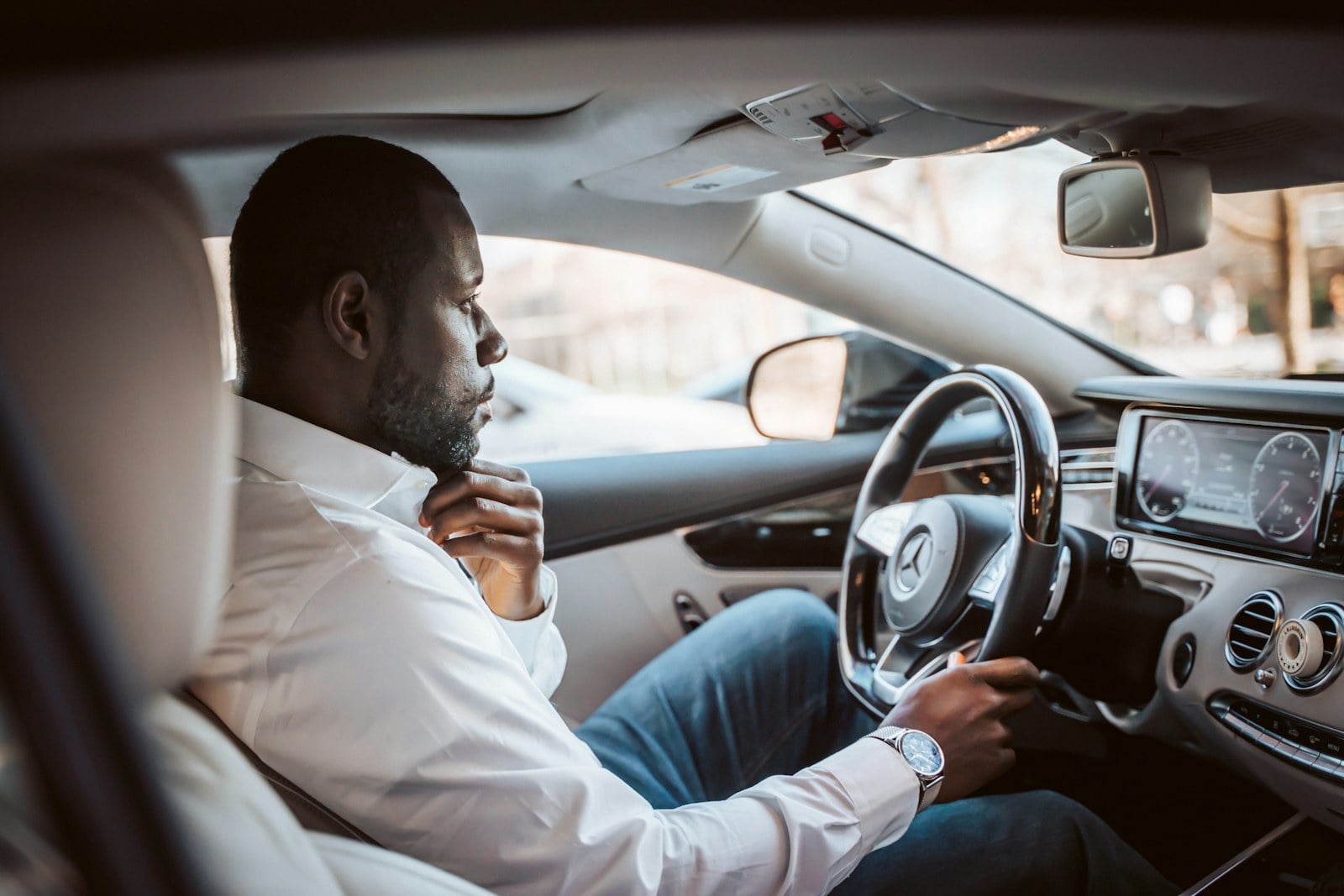
If you carry in the city, you already know the deal: nobody should be able to tell you’re carrying. That part’s easy standing up. Then you drop into the driver’s seat, buckle up, and the holster that disappeared all morning is suddenly digging into your gut, jammed against the seat, or buried under the seatbelt.
City carriers sit a lot. The commute, the crawl through traffic, the drive-thru, the ten minutes circling for parking. I used to drive for a living, so I’ll say it straight: comfort behind the wheel isn’t a luxury. A setup that hurts after twenty minutes is a setup that starts staying home.
There’s no holy grail carry position for the driver’s seat. What works for a slim guy in a compact car won’t work for everybody. Here’s how each position behaves when you’re seated, the small tweaks that fix most problems, and how to practice your draw without doing anything dumb.
Carrying while driving: the quick answer
- Appendix usually gives the easiest reach in the car, but it can press into your thigh or stomach on long drives.
- Strong-side hip is comfortable for a lot of people, but the seatbelt and seat can cover the gun.
- Cross-draw is the classic driver’s pick, as long as you’re disciplined about where the muzzle points when you draw.
- A stiff gun belt and an upright seat fix more car-carry problems than any new holster.
- Practice your seated draw with an unloaded gun, at home, in a parked car.
Why sitting changes your carry
When you sit, everything shifts. Your waistband moves, your thighs and belly push up into the holster, and three new obstacles show up: the seatbelt, the center console, and the seat itself. Alien Gear’s car carry guide calls out all of them, plus one most people miss: a reclined seat shifts the holster rearward, which slows your draw. Sitting more upright helps both comfort and access.
Carry positions behind the wheel
| Position | In the driver’s seat | Watch out for |
|---|---|---|
| Appendix (about 1 to 2 o’clock) | The most direct reach when seated, because the gun sits ahead of the seatbelt buckle. | Pressure on your thigh or stomach, especially on long drives or if you carry weight up front. |
| Strong-side hip (about 3 to 4 o’clock) | Comfortable for many people, especially with a forward cant (about 15 degrees) so the grip clears the seat. | The seatbelt and seat bolster can cover the gun, and you may have to twist to reach it. |
| Cross-draw (weak side, just in front of the hip) | Easy to reach seated, and the gun stays away from the buckle. | The draw swings across your body, which can sweep a passenger. It takes dedicated practice. |
| Small of the back (5 to 6 o’clock) | Not recommended for car carry. | You’re sitting on it, and it’s hard to reach against the seatback. |
Appendix carry in the car
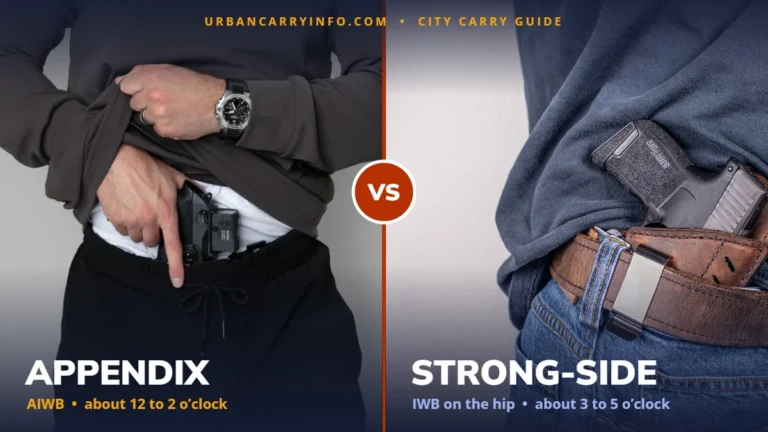
Appendix (AIWB, for appendix inside the waistband) tends to be the fastest position to reach from the driver’s seat, because nothing is in the way. The seatbelt buckle sits beside your hip, and the gun sits in front of it. The catch is comfort. When you sit, the muzzle end of the holster can press into your thigh, and the grip can push into your stomach. Ride height (how high the gun sits) and the holster’s claw make a big difference here. Our appendix vs. strong-side breakdown goes deeper on both.
Strong-side carry in the car
Strong-side at 3 to 4 o’clock is a popular way to carry, and plenty of drivers find it comfortable once it’s tuned. A forward cant tilts the grip toward the front so it doesn’t jam into the seat. The trade-off is access: the seatbelt crosses right over that spot, and a bucket seat’s bolster can box the gun in. Lots of carriers live with it. Just know that your draw in the car will be slower than your draw standing up.
Cross-draw: the driver’s favorite, with a catch
Cross-draw puts the gun on your weak side, in front of the hip, with the grip angled toward your strong hand. The USCCA notes it’s often recommended for people who spend most of their day driving or seated. In its driving-holster test, Gun Tests magazine wrote that “the first choice for driving use seems to be a crossdraw model.”
Here’s the catch. Vedder Holsters points out that the cross-draw’s wide arc can sweep people beside you before the gun reaches the target. With a passenger in the front seat, that’s not a small thing. The first rule of gun safety, keeping the gun pointed in a safe direction, matters more with cross-draw than with any other position. If you go this route, practice until your draw brings the gun up and out instead of swinging it across the car.
Small tweaks that make a big difference
Before you buy a new holster, try these:
- Fix the belt first. Sitting puts more strain on your whole setup than standing does. A stiff gun belt keeps the holster from flopping and tipping. Our gun belt guide covers what to look for.
- Adjust ride height and cant. Many holsters let you raise, lower, or angle the gun. A little forward cant often solves the “grip in the seat” problem for strong-side carry.
- Sit up a notch. A more upright seatback keeps the holster where you can reach it.
- Pick a cover garment that clears the holster when you’re seated. A shirt that’s just long enough standing can ride up and print the second you sit.
- Check the seatbelt after you buckle. Alien Gear suggests testing in a parked car to make sure your grip clears the seatbelt and armrests.
- Holster up before you drive, and leave it there. Alien Gear also warns against setting the gun on a seat or the floor, which builds bad habits and leaves it loose in the car.
What about car holsters and mounts?
Under-dash and seat-mounted holsters are popular with people who drive a lot. If you go that way, Alien Gear’s cautions are worth following: use a holster that fully covers the trigger guard (never a bare mount that leaves the trigger exposed), bolt or screw the mount in instead of relying on straps, and keep it clear of airbags, the shifter, and your controls.
The bigger problem is the moment you get out. Every time you leave the car, you either move the gun to your body in a parking lot or leave it sitting in a mount anyone can see through the window. And a gun in a mount is a gun left in the car. In Virginia, for example, a handgun left in an unattended car has to be out of plain view in a locked, hard-sided container, and a dash mount is neither. For most city carriers, on-body carry plus a real car safe is the simpler system. Our car gun safe guide walks through the options and the state rules.
One more thing to check: how your permit and your state treat a gun that’s in the car but not on your body. Those rules vary, so look them up before you commit to a mount.
Holster options for drivers, by body type and use
Here are some directions to look at. You know your body, your car, and your commute better than we do, so pick what fits. Prices are what we saw on the brands’ sites in October 2026.
Slimmer build, mostly short city trips: appendix IWB
If appendix already works for you standing, it’ll probably work best in the car too. Rounded’s IWB Kydex holsters use their Posi-Click adjustable retention with full trigger guard coverage, and they offer a claw that helps tuck the grip in for appendix carry.
Bigger midsection or long drives: cross-draw
If appendix pinches when you sit, cross-draw moves the gun off your belly. The Galco Switchback ($79) is a ballistic nylon and steerhide hybrid that converts between strong-side and cross-draw and between right and left hand, and it fits belts up to 1.75 inches. Gun Tests named it a Best Buy in its driving-holster comparison. The Galco Hornet ($120) is premium steerhide, made for compact and subcompact handguns, and Galco lists it for cross-draw or butt-rearward appendix carry.
You switch it up day to day
If you drive a lot some days and walk a lot on others, a convertible holster like the Switchback lets you try strong-side and cross-draw without buying two holsters. Either way, pair it with a real gun belt like the Arrowhead Enhanced Rapid Clasp or one of the options in our gun belt guide.
How to practice your seated draw safely
Drawing from the driver’s seat is its own skill. You’ve got a seatbelt across your body, a steering wheel in front of you, and less room to move. The only way to know your setup works is to try it, carefully.
- Make sure the gun is unloaded, check it twice, and keep all ammunition out of the car. A training replica is even better.
- Practice at home, in a parked car, somewhere private like your garage or driveway, not a public parking lot.
- Follow the basic safety rules the whole time: keep the gun pointed in a safe direction and your finger off the trigger until you’re on target.
- Sit the way you actually drive. Seat in your normal spot, seatbelt buckled, your usual cover garment on.
- Go slow. Clear the cover garment, get a full grip, clear the seatbelt, and present the gun. Notice what snags: the belt, the armrest, the console, your jacket.
- Adjust and repeat. Move the holster, change the cant, or try a different position until the draw is clean and consistent.
- Reholster slowly when you’re done, and only load the gun once practice is completely over.
If an instructor near you offers a vehicle-focused class, it’s worth the money. Practice also means knowing what to do if you’re pulled over: hands on the wheel, no reaching, and our traffic stop guide covers the rest.
Carrying while driving FAQ
What’s the most comfortable way to carry while driving?
It depends on your body and your car. Many drivers like appendix for access or cross-draw for comfort on long trips, while others stick with a tuned strong-side setup. Try your current holster seated before you buy anything new.
Should I take the gun off while I drive?
Think it through first. Taking the gun off means handling a loaded gun in a cramped space, and setting it on the seat or floor is exactly what Alien Gear’s guide warns against. If you don’t want it on your body, it belongs in a mounted holster that covers the trigger guard or in a locked safe, and you need to check your local law.
Is cross-draw safe with a passenger?
It can be, with training. The risk is the draw arc sweeping the person next to you. Practice bringing the gun up and out, not across the car, and keep the muzzle in a safe direction the whole way.
Does my carry permit cover my car?
In most places your permit covers your car anywhere that permit is honored, but the details change from state to state. Our vehicle concealed carry guide covers Maryland, DC, Virginia, and Pennsylvania.
Find what works for you
Start with what you already own. Sit in your car with your current holster, buckle up, and see what fights you. Then tweak the belt, the cant, and the seat before you spend a dime. If you still need a change, look at a convertible cross-draw like the Galco Switchback or an appendix rig from Rounded, and grab a car gun safe for the stops where the gun can’t come with you. Then check the carry laws for your city before your next trip.
Your body, your car, and your commute aren’t the same as anybody else’s. Take what fits, skip what doesn’t, and build a setup you’ll actually wear every time you get behind the wheel.
Legal note: This is general information, not legal advice. Vehicle carry and storage laws vary by state and city, so check your local law before you rely on anything here.
Sources
- Alien Gear Holsters: Concealed Carry in a Car
- Gun Tests: Driving Holsters Compared (2020)
- USCCA: What Is Cross Draw?
- Vedder Holsters: Pros and Cons of Cross Draw Carry
- Guns & Ammo: NRA Gun Safety Rules
- Code of Virginia § 18.2-308.7:2 (handguns in unattended vehicles)
- Product details from the Galco, Rounded, and Arrowhead product pages (October 2026)