Pulled Over While Carrying: What Police Can Do and What You Should Do (MD, VA, DC)
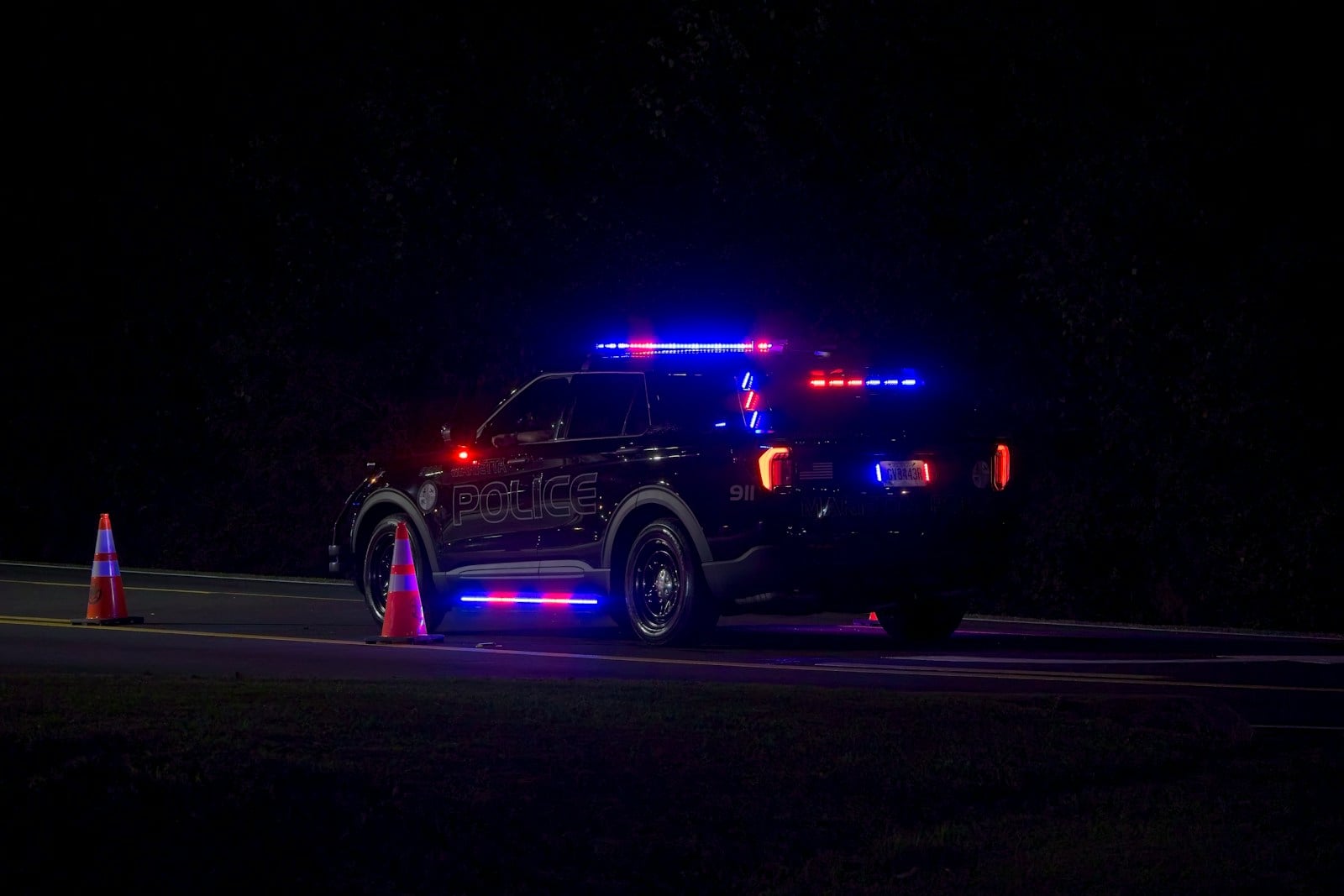
Blue lights in the mirror. Your stomach drops a little, even if all you did was roll a stop sign. Now add a pistol on your hip and the questions start stacking up fast: Do I say something? Can they take my gun? Can they search my car?
Our duty to inform guide covers what you’re required to say in DC, Maryland, and Virginia. This one covers everything around it: what an officer is legally allowed to do once you’re stopped, how to set up your car before it ever happens, and what to do if your gun leaves your hands for a few minutes.
We built it from U.S. Supreme Court cases, Fourth Circuit precedent (the federal appeals court covering Maryland and Virginia), and the DC, Maryland, and Virginia statutes, all cited at the bottom.
Quick answer: pulled over while carrying in the DMV
- DC: You must tell the officer you’re carrying, show your license and registration certificate, and say where the gun is. The officer may pat you down and hold the pistol during the stop.
- Maryland and Virginia: No duty to volunteer it, but your permit has to be on you (and in Virginia, you show it with photo ID when asked).
- Everywhere: Officers can order you and your passengers out of the car, and in Maryland and Virginia, a reasonable belief that you’re armed is enough for a pat-down, even if you’re carrying legally.
- Your job: keep your hands visible, don’t reach until you’re told to, and keep your documents somewhere that isn’t next to your gun.
What can police legally do during a traffic stop?
Knowing the officer’s legal playbook takes a lot of the panic out of it. None of this is about whether a stop feels fair. It’s about what courts have already said is allowed, so nothing catches you off guard.
They can order you out of the car
Once a car is lawfully stopped, the officer can order the driver out without any extra reason (Pennsylvania v. Mimms, 1977). Twenty years later, the Supreme Court extended that to passengers in Maryland v. Wilson (1997), a case that came out of a Maryland traffic stop. So if you’re asked to step out, that’s a routine move, not a sign things are going sideways.
They can pat you down if they believe you’re armed
A frisk (a pat-down of your outer clothing for weapons) normally requires reasonable suspicion that you’re “armed and dangerous.” The Supreme Court confirmed that standard applies to drivers and passengers during traffic stops in Arizona v. Johnson (2009).
Here’s the part every Maryland and Virginia carrier should understand. In United States v. Robinson (2017), the full Fourth Circuit held that an officer who makes a lawful stop and reasonably suspects someone in the car is armed may frisk that person, and that the gun being legal to carry doesn’t change the analysis. In the court’s view, the danger comes from the combination of a forced police encounter and a weapon.
Translation: in the Fourth Circuit, telling an officer you’re carrying gives them legal grounds to pat you down and secure the gun for the stop. Plenty of carriers disclose anyway, for good reasons our duty to inform guide explains. Just know what disclosure can lead to, so it doesn’t feel like an accusation when it happens.
In DC, you don’t have to wonder. D.C. Code § 7-2509.04(d) spells out that a licensee stopped while carrying must comply with lawful orders, including allowing a pat-down and letting the officer take possession of the pistol for the duration of the stop.
They can check where a weapon could be within reach
If an officer reasonably believes a person is dangerous and could grab a weapon, they can do a protective search of the passenger compartment, limited to places a weapon could be hidden (Michigan v. Long, 1983). That’s a weapons check, not a full search of everything you own.
They can’t drag the stop out forever
A traffic stop is supposed to last as long as it takes to handle the reason for it: the violation, plus checking your license, registration, insurance, and warrants. In Rodriguez v. United States (2015), the Supreme Court held that police can’t extend a stop beyond that mission (for example, to wait for a drug dog) without reasonable suspicion of something more.
Can you say no to a search?
You can decline a request to search your car, and the officer doesn’t have to tell you that you’re allowed to refuse (Schneckloth v. Bustamonte, 1973). Say it calmly and keep your hands where they are. Declining consent doesn’t stop a search the officer can do anyway, though. With probable cause, police can search a vehicle without a warrant under the automobile exception (Carroll v. United States, 1925). If they search over your objection, don’t physically resist. That fight belongs in a courtroom, not on the shoulder of I-695.
Set up your car before you ever get pulled over
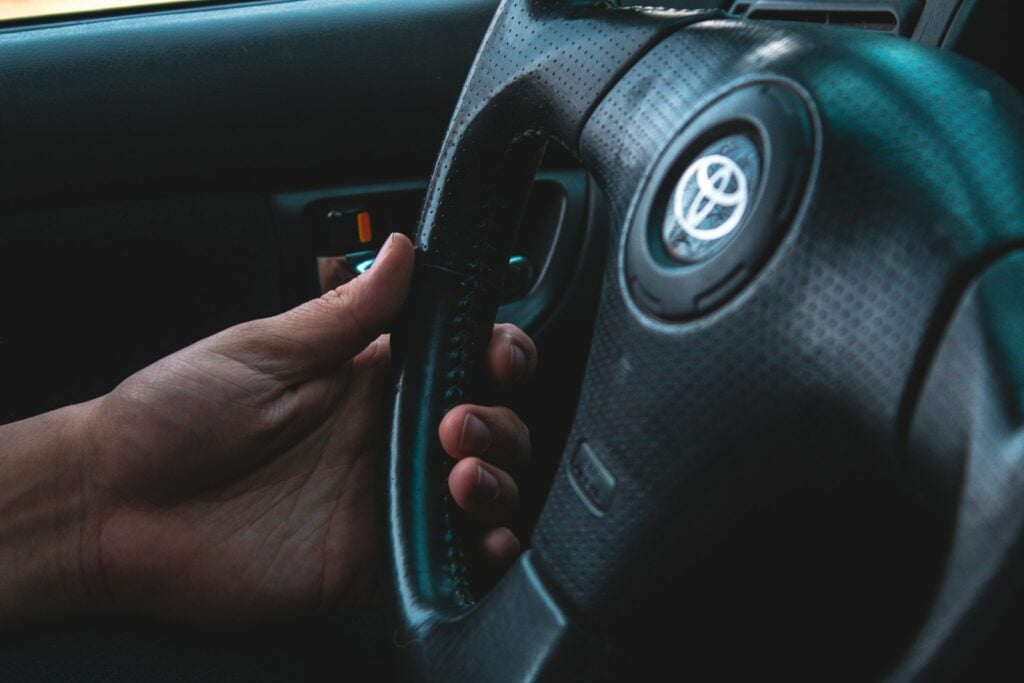
A lot of the tension at a stop comes from one moment: someone reaching for paperwork that lives right next to a pistol. Fix that in your driveway, not on the shoulder.
- Separate the paperwork from the gun. If your gun ever rides in the glove box or console, your registration and insurance card should live somewhere else, like a visor sleeve. Nobody wants to open a glove box with an officer watching and a Glock sitting on top of the insurance card.
- Keep your permit with your license. Maryland requires you to carry your permit whenever you carry (Md. Public Safety § 5-308). Virginia requires the permit on you and shown with photo ID on demand (Va. Code § 18.2-308.01). DC requires your license and registration certificate on you. One wallet, one reach.
- Decide where the gun rides. On your body in a holster that clicks in and stays put when you’re seated is the simplest: it doesn’t move, and you never need to touch it. Leather options like Galco’s holsters and Kydex options like Rounded by Concealment Express both work; it comes down to your body and what feels right behind the wheel. Our appendix vs. strong-side guide covers how each position sits in a car.
- Know Virginia’s container rule. Without a permit, Virginia only lets a lawful possessor keep a handgun in a personal, private vehicle if it’s secured in a container or compartment (Va. Code § 18.2-308(C)(8)). Virginia courts have read “secured” as latched or fastened, not necessarily locked, and the state Supreme Court held a fully zipped backpack qualified in Myers v. Commonwealth (2021).
- Have a plan for places you can’t carry. A mounted car safe means the gun has a home when you have to leave it behind. Boosted Safe clips into the child-seat anchors in a back seat, and Everlasting Safes offers several car-safe styles. Vehicle storage rules vary by state and city, so check our vehicle carry guide.
At the stop: what to do and what to say
Boring is the goal. Boring stops end with everybody going home.
- Signal, pull over somewhere safe, put it in park, and turn the engine off.
- At night, switch on the dome light. Lower your window before the officer reaches the car.
- Both hands on the wheel, and leave them there.
- Don’t reach for anything until you’re asked. When you are, say where it is first, then move slowly.
- Follow instructions. If you’re told not to touch the gun, don’t touch the gun, even to “help.”
If you’re telling the officer (required in DC, your choice in Maryland and Virginia), keep it to one calm sentence that includes where the gun is. Something like: “Officer, I have a carry permit and I’m carrying. It’s holstered on my right hip. My permit’s in my wallet in my back pocket. How would you like me to proceed?”
Then stop talking and let them lead. Reaching for your wallet while you’re mid-explanation is how a calm stop turns tense.
What if you’re the passenger?
Passengers are part of the stop too. Under Maryland v. Wilson, you can be ordered out, and under Arizona v. Johnson, you can be frisked if the officer reasonably suspects you’re armed and dangerous. In DC, the disclosure duty in § 7-2509.04(d) applies to any licensee carrying during the stop, not just the driver. Same hands-visible rules apply in the passenger seat.
If you’re riding in an Uber or Lyft, there’s an extra wrinkle: both companies prohibit guns on their platforms. Our rideshare carry guide breaks that down.
If the officer takes your gun
It can feel like a big deal the first time someone else is holding your carry gun. Legally, it’s an expected part of a stop: DC’s statute says so outright, and Robinson backs it up in Maryland and Virginia.
- Let the officer retrieve it unless they specifically tell you to do something else. Then do exactly that, slowly.
- It may come back unloaded, with the magazine and rounds handed over separately. Don’t reload at the window. Wait until the stop is over, then pull over somewhere safe and get it sorted.
- If it isn’t returned, ask for the officer’s name, badge number, and how to get it back, and write it down.
Forgot your permit at home?
That’s its own problem, separate from the stop. Maryland, Virginia, and DC all require the permit or license to be on you while you carry (Md. Public Safety § 5-308; Va. Code § 18.2-308.01; D.C. Code § 7-2509.04). Be honest if asked, and don’t argue it out on the roadside. The simplest fix is prevention: the permit lives with your driver’s license, always.
After the stop
Most stops end with a warning or a ticket and a “drive safe.” If something felt wrong, the roadside isn’t the place to settle it. Write down the officer’s name, badge number, agency, time, and location while it’s fresh, and take it up afterward through the agency’s complaint process or with a lawyer.
Pulled over while carrying: FAQ
Do I have to tell police I’m carrying during a traffic stop? In DC, yes. In Maryland and Virginia, no statute requires you to volunteer it, though Virginia requires you to show your permit and photo ID if asked. Our duty to inform guide has the details.
Can police take my gun during a traffic stop? Yes, temporarily. DC’s statute expressly allows it, and under the Fourth Circuit’s Robinson decision, officers in Maryland and Virginia who reasonably believe you’re armed can frisk you and secure the weapon.
Can police search my car because I have a gun? A lawful gun alone doesn’t give them probable cause for a full search. They can do a limited protective check of areas within reach if they reasonably believe someone is dangerous (Michigan v. Long), and they can search with your consent or with probable cause.
Should I keep my gun in the glove box? In Maryland, you need a permit to carry a loaded handgun in your car at all. Wherever you are, the glove box is usually where your registration lives, which is exactly why we suggest moving one or the other.
Find what works for you
There’s no holy grail traffic-stop routine. Some carriers disclose every time, some only when the law requires it. Some keep the gun on their body, others prefer a safe for certain trips. What matters is that you’ve decided ahead of time, your documents are in a different spot from your gun, and your hands stay where they belong.
Next up, read our complete guide to vehicle concealed carry and check the carry laws for your city. If your car still doesn’t have a home for the gun, look at Boosted Safe and Everlasting’s car safes, and find a holster that stays comfortable behind the wheel.
Stay calm, stay legal, and get home safe. You’ve got this.
Legal note: This is general legal education, not legal advice. Court decisions and statutes change, and how they apply depends on the facts of your stop. Verify current law with the sources below and talk to an attorney about your specific situation.
Sources
- Pennsylvania v. Mimms, 434 U.S. 106 (1977)
- Maryland v. Wilson, 519 U.S. 408 (1997)
- Arizona v. Johnson, 555 U.S. 323 (2009)
- Michigan v. Long, 463 U.S. 1032 (1983)
- Rodriguez v. United States, 575 U.S. 348 (2015)
- Schneckloth v. Bustamonte, 412 U.S. 218 (1973) and Carroll v. United States, 267 U.S. 132 (1925)
- United States v. Robinson, 846 F.3d 694 (4th Cir. 2017) (en banc), summarized by the UNC School of Government
- D.C. Code § 7-2509.04 (licensee duties) and the Metropolitan Police Department summary
- Md. Public Safety § 5-308 (permit possession) and Va. Code § 18.2-308.01 (permit display)
- Va. Code § 18.2-308(C)(8) (vehicle exception), as applied in Myers v. Commonwealth (Va. 2021)
Photos via Unsplash: featured photo by Jacob McGowin.
Affiliate disclosure: Some links in this article are affiliate links. If you buy through them, Urban Carry Info may earn a commission at no extra cost to you.