
Apartment Self-Defense for Concealed Carriers: A Renter’s Guide
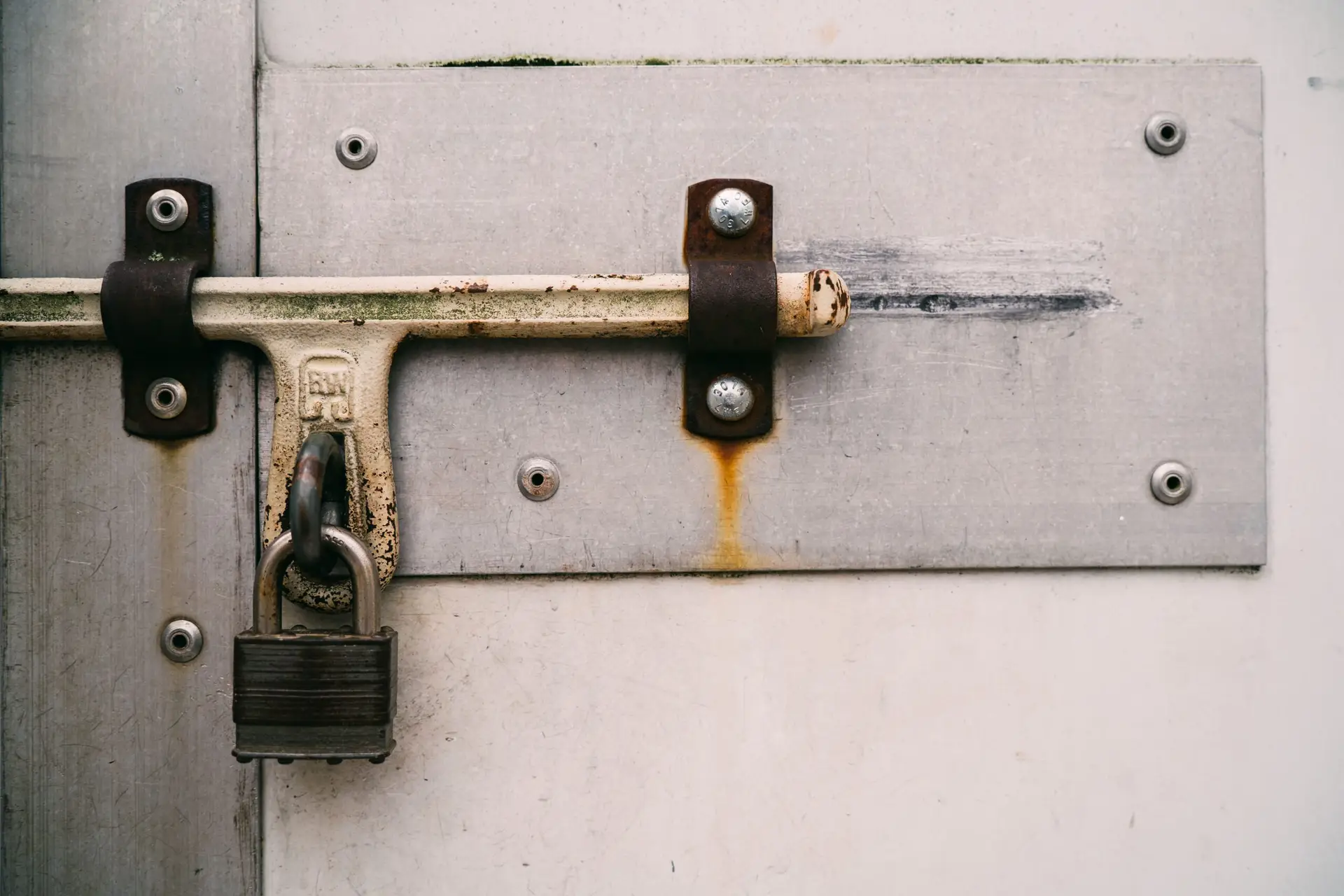
Most home defense advice is written for a house with a yard, a garage and a family room you could land a helicopter in. If you live in an apartment, a lot of it doesn’t fit. Your walls are shared. Your hallway belongs to everybody. Your landlord owns the door. And the people on the other side of your bedroom wall are close enough to hear you sneeze.
That doesn’t make an apartment less safe. It just means the plan looks different. Here’s how we’d think it through as a renter who carries, from the front door to the law.

Start at the front door
In most apartments the front door is the only way in that matters, so that’s where your effort goes first.
- Strike plate and long screws. The weak spot on most doors isn’t the lock, it’s the short screws holding the strike plate to a thin trim board. Police crime-prevention guides recommend replacing them with screws at least 3 inches long that reach the framing stud behind the door frame (Seattle Police Department).
- A wide-angle door viewer. You should be able to see who’s knocking without opening the door or standing in front of it (Denton Police Department).
- Ask first. Hardware is usually the landlord’s property, so get permission in writing before you swap anything. A lot of landlords say yes to a security upgrade, especially when you offer to leave it behind.
- Renter-friendly extras. Portable door alarms and stick-on cameras need no drilling. If you use a portable door brace, make sure you can pull it fast in a fire.
Windows, balconies and sliding doors
Upper floors cut down your exposure, but they don’t erase it. Ground-floor units, windows near fire escapes and balcony sliders all deserve a look.
For sliding doors, crime-prevention guides recommend a wooden dowel or a “Charley bar” in the bottom track so the door can’t be forced sideways (California Attorney General’s Crime and Violence Prevention Center, St. Paul Police Department). The same California guide suggests screws in the upper track to keep the door from being lifted out, which is another one to clear with your landlord first.
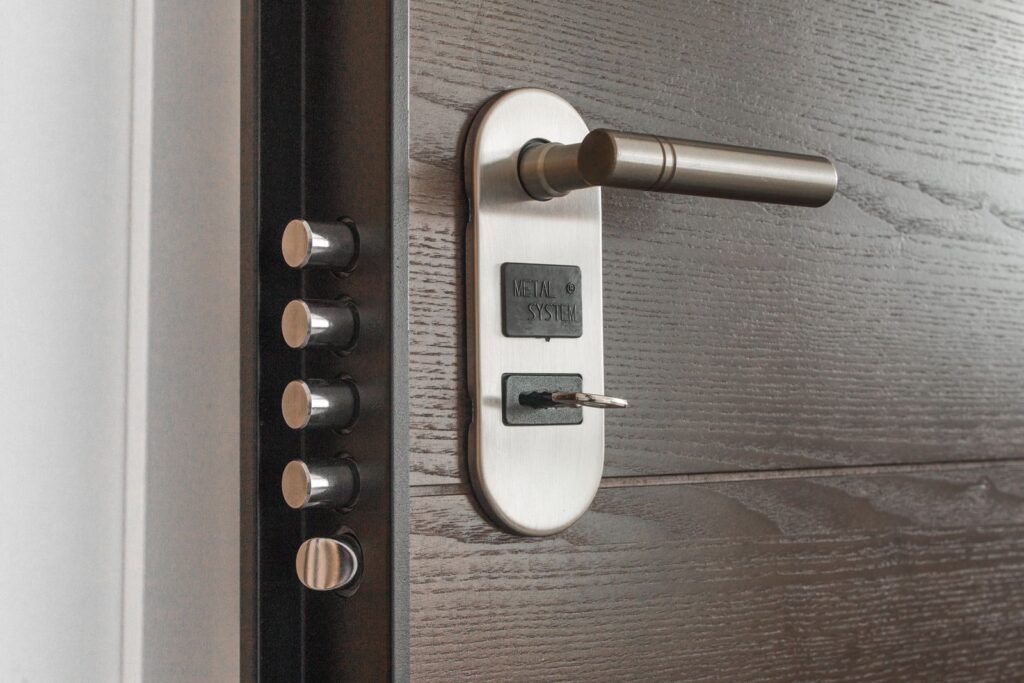
Know your building
Your security starts before anyone reaches your door. In an apartment, that means the lobby, the stairwells and the hallway.
- Report propped-open entry doors, broken locks and burned-out lights to management in writing. You’re not being a pain; you’re creating a record.
- Learn at least two ways out of the building, and walk them once so you’re not figuring it out in the smoke.
- Get to know the neighbors on either side of you. You don’t need to be best friends. You just want people who’ll notice when something’s off and know how to reach you.
Thin walls change the gun conversation
Here’s the part house-based advice skips. In an apartment, there are people on the other side of almost every wall, and ordinary handgun bullets don’t stop at drywall.
When Gun Tests fired common defensive handgun loads into stacks of half-inch wallboard, the hollow point loads still went through 7 to 12 inches of it (that’s 14 to 24 sheets), and the magazine concluded that most of the loads could penetrate several house walls. Hollow points are made to stop in a body. They are not made to stop in a wall.
So build your plan around that:
- Know what’s behind each wall. Which walls back up to a neighbor’s bedroom? Which ones face brick or the outside? It matters which direction you’d be facing from your safe spot.
- Pick a safe spot, not a hunting trip. For most renters, the smart plan is to gather your household in one room, call 911 and hold a position covering the door, instead of clearing the apartment yourself.
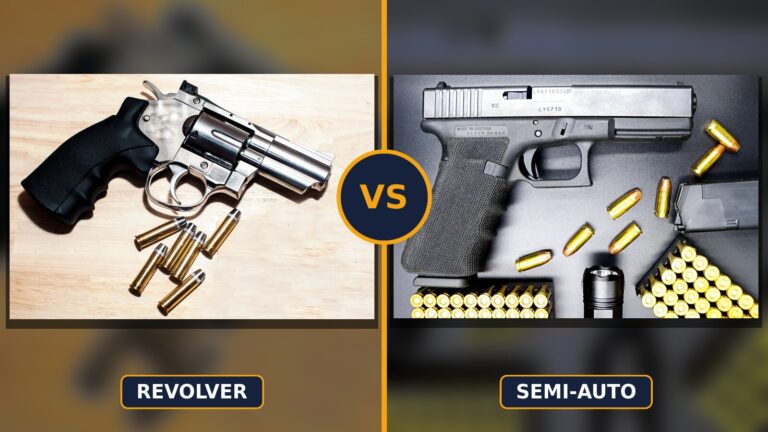
- Train for the space you live in. Practice with the gun you’d actually grab. Our revolver vs. semi-auto breakdown and city carry pistol guide can help you choose.
Gun storage: what Maryland law actually says
Maryland’s child access law was tightened in 2023 (often called Jaelynn’s Law). Under Md. Criminal Law § 4-104, you may not store or leave a loaded firearm where you knew or should have known that an unsupervised minor has access to it. The 2023 change replaced “child” (under 16) with “minor,” which the legislature’s fiscal and policy note explains means anyone under 18.
There are exceptions, including when an adult 18 or older is supervising, when the minor got the gun through an unlawful entry, and when the minor holds a Maryland firearm and hunter safety certificate. A violation is a misdemeanor with a fine of up to $1,000.
The law doesn’t name a specific safe or lock. It’s about access. In practice, a quick-access handgun safe or lockbox is the simplest way to keep a loaded gun ready for you and out of reach of kids, visitors and anyone else, and it’s worth it even if no kids live with you, since nieces, nephews and neighbors’ kids visit too. Everlasting Safes sells handgun and car safes if you’re shopping. Not in Maryland? Check your own state’s storage law; they vary a lot.
Self-defense law at home in Maryland
Maryland generally expects you to retreat from a threat if you can do it safely. Your home is the big exception. Maryland courts have long held that a person facing an attack on their dwelling doesn’t have to retreat from it and may use force, including deadly force if necessary, to repel the attack. That rule comes from Crawford v. State (1963) and Burch v. State (1997), as summarized in a 2026 Maryland legislative fiscal note.
The usual limits still apply. You can’t be the aggressor, your fear has to be reasonable, and the force can’t be more than the situation calls for.
Your hallway probably isn’t your home. We found no Maryland decision that treats apartment hallways or lobbies as part of your dwelling, and the 1978 Maryland case Gainer v. State quotes a legal treatise saying a dwelling doesn’t include the halls or common rooms of an apartment house. Until a court says otherwise, plan on the no-retreat rule stopping at your apartment door.
Your lease and your guns
We couldn’t find a Maryland statute that stops a private landlord from restricting guns in a lease. That means the answer is in your lease, not in the law books. Read it before you sign, ask the property manager directly if it’s unclear, and get the answer in writing. Public and subsidized housing can raise different questions, so talk to a lawyer if that’s your situation.
Fire and medical emergencies need a plan too
A home defense plan that only covers break-ins is half a plan. The U.S. Fire Administration recommends smoke alarms in every bedroom, outside each sleeping area and on every level, testing them at least once a month, and replacing any alarm that’s 10 years old (USFA). Push the test button this week; it takes ten seconds.
Keep a fire extinguisher where you can grab it near the kitchen, a flashlight by the bed, and your phone charging where you’ll actually find it at 3 a.m. Our urban EDC guide covers small lights and other gear worth having around.
Make a plan everyone in your home knows
- Where do we go? One room, ideally with a solid door and a phone signal.
- Who calls 911? Decide ahead of time, and know your full address including the unit number and building entrance.
- What do we tell dispatch? Where you are in the apartment, that you’re armed if you are, and what you’re wearing, so arriving officers know who’s who.
- How do we get out? For a fire, the plan flips: you leave. Know both exits.
Apartment self-defense FAQ
Do I have to retreat if someone breaks into my apartment in Maryland?
No. Maryland courts hold that you don’t have to retreat from your home when facing an attack on it, as long as you’re not the aggressor, your fear is reasonable and your force isn’t excessive.
Is my apartment hallway part of my home?
Probably not. No Maryland decision we found treats common hallways or lobbies as part of your dwelling, so treat your apartment door as the line.
How should I store a gun in an apartment?
In Maryland, you can’t leave a loaded gun where an unsupervised minor could get to it (Md. Criminal Law § 4-104). A quick-access handgun safe or lockbox is the easiest way to keep it ready for you and away from everyone else.
Can my landlord ban guns in my apartment?
We didn’t find a Maryland statute that prevents a private landlord from restricting guns in a lease. Check your lease and get any answer from management in writing.
Will hollow point bullets stop in drywall?
Don’t count on it. In testing published by Gun Tests, hollow point loads passed through 7 to 12 inches of stacked half-inch wallboard. Plan your safe spot with your neighbors’ walls in mind.
Legal note
This is general legal education, not legal advice. Self-defense and storage laws change, and how they apply depends on the facts. Check the statutes and cases linked above, and talk to a Maryland attorney about your situation.
Find the plan that fits your place
Your apartment doesn’t need to look like a bunker. It needs a stronger door, a few habits, a gun stored the right way and a plan everybody in the house knows.
If you’re carrying in Maryland, start with our guide to the Maryland Wear and Carry Permit and our Baltimore carry laws page, and if you drive, our vehicle carry guide covers car safes and traffic stops.
There’s no holy grail setup. Every building, every floor plan and every household is different, so take what fits your place, skip what doesn’t, and build a plan you’ll actually stick with.
Affiliate disclosure
Some links on this page are affiliate links, including Everlasting Safes. If you buy through them, Urban Carry Info may earn a commission at no extra cost to you. It never changes what we recommend.
Sources
- Md. Criminal Law § 4-104 (access to firearms by minors)
- Fiscal and Policy Note, SB 858 (2023)
- Fiscal and Policy Note, HB 1406 (2026) (current self-defense law, citing Burch v. State, 346 Md. 253 (1997), and Crawford v. State, 231 Md. 354 (1963))
- Gainer v. State, 40 Md. App. 382 (1978)
- Gun Tests: Handgun bullets and home materials
- Seattle Police Department: Door security
- California Attorney General: Home security hardware
- U.S. Fire Administration: Smoke alarms
Get the next guide in your inbox
New city carry-law updates and gear guides when we publish them. No spam, and you can unsubscribe anytime.
You're on the list. Thanks for signing up!


Comments