Castle Doctrine vs. Stand Your Ground vs. Duty to Retreat: What City Carriers Need to Know

Carrying a gun is the easy part. Knowing when the law actually lets you use it? That’s where people get tripped up.
Three phrases come up every time this topic does: castle doctrine, stand your ground, and duty to retreat. You’ll hear them at the range, in group chats, and from that one guy at the gun counter who’s very sure about everything. (He is not always right.)
Here’s what each one means in plain English, how Maryland handles it, and how the rules change in the cities we cover. No 50-state slog. Just what you need to know before you walk out the door.
The short version
- Duty to retreat: before using deadly force, you have to get away if you can do it safely.
- Castle doctrine: no duty to retreat in your own home. Some states stretch it to your car or workplace.
- Stand your ground: no duty to retreat anywhere you have a legal right to be, usually as long as you didn’t start it.
- Maryland: duty to retreat outside your home if you safely can. No duty to retreat inside it.
- None of them make a bad shoot legal. The threat still has to be real, imminent, and serious.
First, the part every state agrees on
Retreat rules sit on top of the basic self-defense test, and that test looks a lot alike from state to state. In Maryland, the courts boil deadly-force self-defense down to a few questions:
- You weren’t the aggressor. You didn’t start it or provoke it.
- You actually believed you were in imminent or immediate danger of death or serious bodily harm.
- That belief was reasonable. A reasonable person in your shoes would have believed it too.
- You used no more force than the situation called for.
Castle doctrine and stand your ground don’t replace any of that. They answer one narrow question: did you have to back away first? That’s it. Neither one is a permission slip.
What is duty to retreat?
A duty to retreat means that before you use deadly force, you have to get away from the threat if you can do it safely. The key word is safely.
New York’s statute says you can’t use deadly force if you know you can avoid it “with complete personal safety” by retreating. Pennsylvania uses “complete safety.” Maryland’s highest court put it as retreating when “retreat is safely possible.” Nobody expects you to turn your back on a drawn gun or sprint into four lanes of traffic.
So picture a guy getting loud and aggressive at a bus stop. If you can walk away, cross the street, or duck into a store and that takes care of it, a duty-to-retreat state expects you to do exactly that before the gun ever comes out.
What is castle doctrine?
Castle doctrine is the home exception. The idea is old (as in “a man’s house is his castle” old): if someone attacks you in your own home, you don’t have to retreat from it first.
Maryland’s Court of Appeals said it plainly back in 1963 in Crawford v. State: “A man is not bound to retreat from his house.” A later case, Barton v. State (1980), said the rule covers members of the household too, whether or not their name is on the deed or lease.
Some states go further and write castle protections into statute, sometimes covering more than the house:
- Pennsylvania presumes you reasonably believed deadly force was necessary when someone unlawfully and forcefully enters your dwelling, residence, or occupied vehicle.
- Texas has a similar presumption covering your occupied habitation, vehicle, or place of business or employment.
- California presumes reasonable fear when someone who isn’t family or a household member unlawfully and forcibly enters your residence.
What does stand your ground mean?
Stand your ground takes the castle idea out of the house. In a stand-your-ground state, you don’t have to retreat anywhere you have a legal right to be, as long as you meet the state’s conditions.
It’s more common than a lot of people think. According to RAND’s gun policy research, as of January 1, 2025, 35 states had stand-your-ground statutes or statutes that extend castle doctrine beyond the home, and other states reach a similar result through court decisions.
The conditions are where the details live. Texas, for example, only removes the duty to retreat if you have a right to be there, didn’t provoke the person, and aren’t engaged in criminal activity. Pennsylvania’s version is much narrower (more on that in the table below).
Is Maryland a stand your ground state?
No. Maryland is a duty-to-retreat state outside the home, and it’s mostly built on court decisions rather than a statute. Here’s how it plays out where you actually spend your day.
On the street, at work, at the store
Before using deadly force, you have to retreat or avoid the danger if you can do it consistent with your safety. If the danger is right on top of you and there’s no safe way out, you don’t have to retreat. Maryland’s top court has described the duty to retreat as a critical factor in deciding whether deadly force was truly necessary.
At home
No duty to retreat if you’re attacked in your home. You still can’t use more force than the situation called for. Even in your living room, the force has to match the threat.
In your apartment building
This one’s murky. The home rule clearly covers your unit. Whether it reaches the hallway, lobby, or laundry room isn’t settled in Maryland, so plan on it stopping at your door. We dig into this in our apartment self-defense guide for renters.
In your car
We couldn’t find a Maryland statute or appellate decision that extends the home rule to your vehicle. Until one does, treat your car like anywhere else outside the home. The good news: a car comes with a built-in way to retreat. Most of the time, driving away is the safest move you’ve got.
The civil side
Maryland added a civil immunity law in 2010 (Courts and Judicial Proceedings § 5-808). It says you’re not liable for damages for injuring or killing someone who enters your dwelling or place of business if you reasonably believed force was necessary to repel their attack and the force you used was reasonable. It doesn’t protect you if you’re convicted of a crime of violence, second-degree assault, or reckless endangerment arising out of the incident. And it’s about lawsuits, not criminal charges.

How the rules compare in the cities we cover
We’re not doing all 50 states here. These are the places our readers live, work, and drive through most. Last checked November 2026.
| Where | Outside the home | At home | Based on |
|---|---|---|---|
| Maryland | Duty to retreat if you can do it safely | No duty to retreat | Court decisions (Crawford, Burch, Sydnor); civil immunity in CJP § 5-808 |
| Washington, DC | No duty to retreat, but a jury may consider whether you could have safely retreated | Courts have said a person attacked at home through no fault of their own has no duty to retreat | DC jury instruction 9.503; Gillis v. United States (1979) |
| Virginia | No duty to retreat if you were without fault. If you were partly at fault, you must retreat as far as possible and announce you want peace. | No duty to retreat if assaulted in your dwelling | Court decisions (Gilbert v. Commonwealth, 1998) |
| Pennsylvania | Duty to retreat if you know you can with complete safety, unless you’re lawfully there, not engaged in criminal activity, not illegally possessing a gun, and the attacker displays or uses a firearm (or replica) or other lethal weapon | No duty to retreat from your dwelling or place of work (exceptions apply); presumption covers forced entry into a home or occupied vehicle | 18 Pa.C.S. § 505 |
| New York | Must retreat before deadly force if you know you can with complete personal safety to yourself and others | No duty to retreat in your dwelling if you’re not the initial aggressor | Penal Law § 35.15 |
| Illinois | Jurors are instructed that a person who didn’t provoke the fight has no duty to try to escape before using force | Deadly force allowed against a violent, riotous, or tumultuous entry, or to prevent a felony in the dwelling | 720 ILCS 5/7-1 and 7-2; IPI Criminal 24-25.09X |
| Georgia | No duty to retreat when force is otherwise justified | No duty to retreat, plus specific defense-of-habitation rules | O.C.G.A. § 16-3-23.1; immunity from prosecution in § 16-3-24.2 |
| Texas | No duty to retreat if you have a right to be there, didn’t provoke, and aren’t engaged in criminal activity | Presumption of reasonableness against forced entry into your occupied home, vehicle, or place of business or employment | Penal Code § 9.32 |
| California | Not required to retreat, even if retreating would have been safe | Presumption of reasonable fear against forced entry into your residence by a non-household member | Penal Code § 198.5; CALCRIM No. 505 |
General information, not legal advice. Laws change, so confirm with the official sources below.
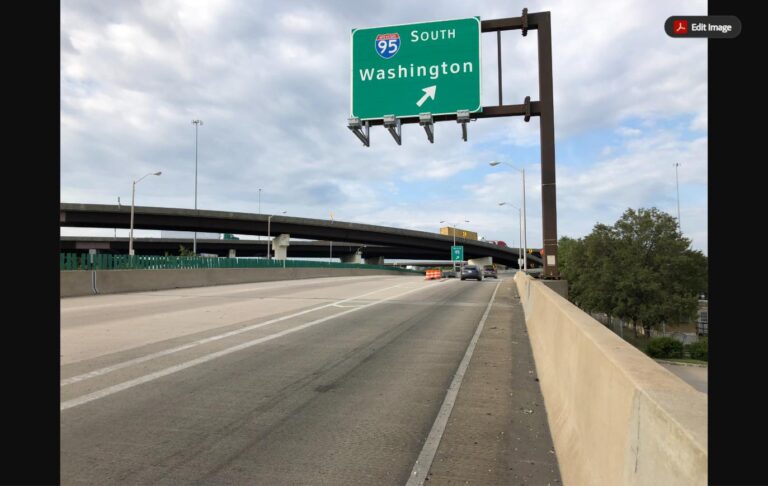
Notice the pattern? Cross the Potomac and the rules change. Drive up I-95 to Philly and they change again. Your carry permit might travel with you (see our reciprocity guide), but your home state’s self-defense law doesn’t.
What this means when you carry in the city
Here’s the practical takeaway, wherever you live.
Don’t be the one who started it. Every rule in that table protects the person who didn’t provoke the fight. Texas says “did not provoke.” New York says “not the initial aggressor.” Illinois says “has not initially provoked.” Mouthing off, following someone to “settle it,” or stepping up when you could’ve stepped back can cost you the whole defense.
Carry legally, every time. Pennsylvania’s stand-your-ground provision doesn’t apply if you’re illegally possessing a firearm. Georgia’s immunity from prosecution doesn’t apply if you used deadly force with a weapon you weren’t legally allowed to carry or possess. Texas drops the no-retreat rule if you’re engaged in criminal activity. An expired permit or carrying where you shouldn’t be is more than a paperwork problem.
Walking away is a win. Even in a stand-your-ground state, “I didn’t have to leave” isn’t the same as “I’m glad I stayed.” Your ego isn’t worth a courtroom, a lawyer’s bill, and a year of your life. The best gunfight is the one you avoided by crossing the street.
Learn this from a real instructor. Use-of-force law is worth an actual class, not a meme. Ask local instructors which courses cover it in depth. If you’re in Maryland, our Wear and Carry permit guide walks through the required training.

Castle doctrine and stand your ground FAQ
Does castle doctrine apply in my car in Maryland?
We didn’t find a Maryland statute or appellate case that extends it to vehicles. Pennsylvania and Texas do give some protection for occupied vehicles, but Maryland doesn’t have a law like that. Treat your car like any other place outside the home.
Does stand your ground mean I can’t be arrested?
Generally, no. In most places, stand your ground is part of your defense in court, not a shield from arrest or charges. Georgia goes further: its law gives immunity from prosecution when force was justified, and Georgia courts decide that question before trial.
If I’m in DC, do I have to retreat?
Not technically. DC doesn’t impose a duty to retreat, but jurors can consider whether you could have safely retreated when they decide whether your use of force was reasonable. In practice, that means the safer exit still matters.
Does castle doctrine let me shoot someone who’s just trespassing?
Castle doctrine only removes the duty to retreat. You still need a reasonable belief that you (or someone else) faced an imminent threat of death or serious bodily harm, and the force still has to fit the threat. Some states have separate rules for defending a home against forced entry, so check your state’s law before assuming anything.
Find what works for you
Start with the carry-law guide for your city, and read the one for anywhere you work or drive through regularly. Then set up your home so your gun is ready for you and nobody else. A quick-access safe by the bed keeps it locked up but within reach: browse Everlasting Safes’ nightstand gun safes or their quick-access gun safes to find one that fits your space.
There’s no one-size-fits-all answer to “what would I do?” Your home, your commute, and your state’s law all shape it. Know the rules where you live, think it through before you ever need it, and build the habits that keep you out of the fight in the first place.
Legal note: This is general legal education, not legal advice. Self-defense cases turn on their specific facts. Check the current statutes below and talk to an attorney about your situation.
Sources
- Sydnor v. State, Maryland Court of Appeals (2001), on the duty to retreat “other than from one’s own home”
- Crawford v. State, 231 Md. 354 (1963); Barton v. State, 46 Md. App. 616 (1980); Burch v. State, 346 Md. 253 (1997); State v. Faulkner, 301 Md. 482 (1984)
- Maryland Courts and Judicial Proceedings § 5-808 (civil immunity for defense of dwelling or place of business)
- Gillis v. United States, 400 A.2d 311 (D.C. 1979), and DC Criminal Jury Instruction 9.503
- Gilbert v. Commonwealth, Court of Appeals of Virginia (1998)
- 18 Pa.C.S. § 505 (Pennsylvania use of force in self-protection)
- New York Penal Law § 35.15
- 720 ILCS 5/7-1 and 720 ILCS 5/7-2; IPI Criminal 24-25.09X as quoted in People v. Sloan, 2024 IL 129676
- O.C.G.A. § 16-3-23.1 and § 16-3-24.2 (Georgia)
- Texas Penal Code § 9.32
- California Penal Code § 198.5 and CALCRIM No. 505
- RAND, “The Effects of Stand-Your-Ground Laws” (updated January 2026)
Get the next guide in your inbox
New city carry-law updates and gear guides when we publish them. No spam, and you can unsubscribe anytime.
You're on the list. Thanks for signing up!