
How to Carry Concealed in the City: The Complete Urban Carry Guide

If you carry in the city, you already know the deal: nobody should be able to tell you’re carrying. Not the barista, not the guy next to you on the train, not your coworkers in the 2 p.m. meeting. City carry is concealed carry on hard mode. More people, closer quarters, more places you legally can’t bring a gun, and a day that has you sitting, standing, and squeezing through turnstiles from morning to night.
The good news? It’s very doable. It just takes a setup that fits your body, your wardrobe, and your day.
There’s no holy grail here. (If somebody tells you their setup is the only right way, smile and keep walking.) This guide walks through every piece of how to carry concealed in the city, step by step, and points you to our deep dives whenever you want more.
How to carry concealed in the city: the short version
- Know the law for every place you’ll actually go, not just your home state.
- Pick a gun you’ll actually carry. For a lot of city carriers, that’s a compact or subcompact with a 3 to 4 inch barrel.
- Use a real holster that covers the trigger guard and holds the gun tight.
- Choose a carry position that fits your body and how much you sit.
- Wear a gun belt. It does half the concealment work.
- Dress around the gun, then check yourself in a mirror.
- Train, and have a plan for the places you can’t carry.
What makes city carry different?
Carrying in a small town and carrying downtown are two different sports. In the city, people brush past you on the sidewalk and press up against you on a packed train. A gun that prints a little in the suburbs gets noticed fast at arm’s length.
- Close quarters: crowds, elevators, turnstiles, and lines put strangers inches from your waistband.
- More no-carry zones: government buildings, schools, transit, and a growing list of “sensitive places” in strict states.
- Company rules: rideshare apps, employers, and building owners often have their own weapons policies.
- Dress codes: the office, the restaurant, the wedding. Tactical pants and a vest full of pockets won’t fly.
- Constant transitions: car, train, desk, stairs, back to the car. Your setup has to work in all of them.
None of that means you can’t carry. It means your setup has to work harder.
Step 1: Know the law where you actually go
Gear is the fun part, so everybody wants to start there. Start here instead. The best holster in the world won’t help you if you carry somewhere your permit isn’t valid.
Three questions to answer before you walk out the door:
- Is my permit good here? A permit only counts where that state honors it. Maryland and DC, for example, don’t honor anyone else’s. Our state-by-state reciprocity guide and DC-Maryland-Virginia reciprocity guide break it down.
- Where can’t I carry? After the Supreme Court’s 2022 Bruen decision struck down New York’s “proper cause” permit rule, several strict states rewrote their laws with longer lists of places where carry is off-limits. See our guide to no-carry zones in your city.
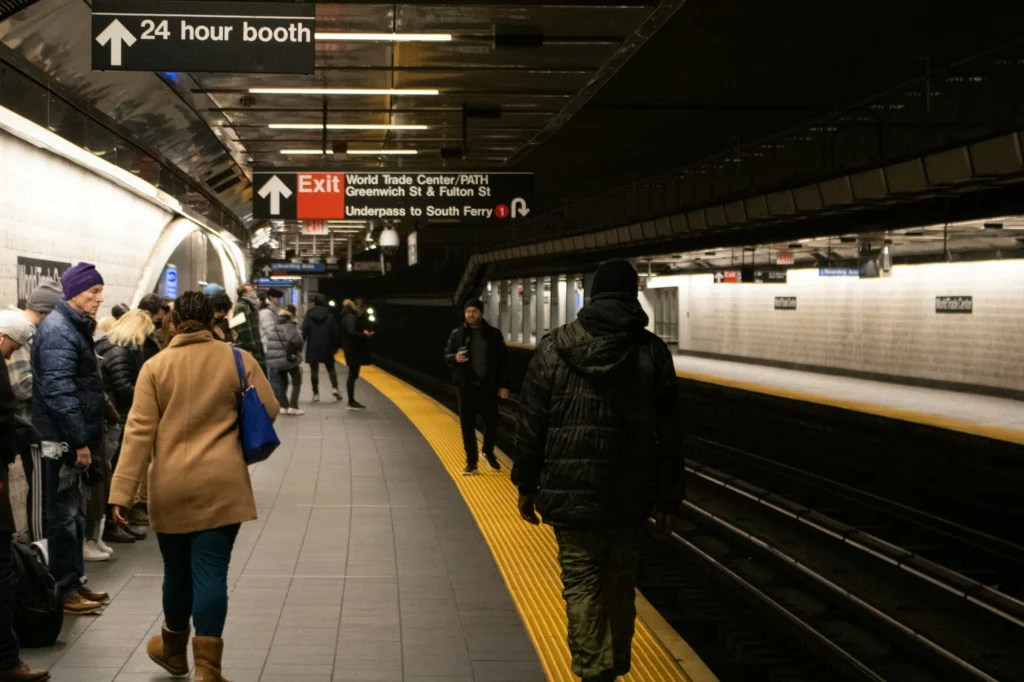
- How am I getting there? Transit systems and rideshare companies have their own rules. Read up on carrying on public transit and Uber and Lyft gun policies. A few examples of how strict it gets: Maryland bans concealed weapons on Maryland Transit Administration property, New York bans guns on the subway (the Second Circuit upheld that in 2025), and Illinois bans carry on the CTA and Metra (the Seventh Circuit upheld that in 2025 too).
Our rule of thumb: plan your carry around the strictest place on your route. If your day starts in Virginia and ends in DC, DC’s rules are the ones that set your plan.
Start with the city you’re in. We’ve got statute-cited guides for Baltimore, Washington, DC, Philadelphia, New York City, Chicago, Atlanta, Houston, and Los Angeles, all collected on our carry laws hub. Brand new to all of this? Read concealed carry for beginners first.
Step 2: Pick a gun you’ll actually carry
The gun that stays in your safe because it’s too heavy, too big, or too annoying protects exactly nobody. For city carry, we lean toward compact and subcompact pistols with barrels around 3 to 4 inches. They’re big enough to shoot well and small enough to hide under a T-shirt.
One thing new carriers miss: the grip is usually what gives you away, not the barrel. A long grip pokes out against your shirt when you bend or sit. That’s why so many micro-compacts pair a short grip with a decent magazine capacity.
- Micro-compacts and subcompacts: the deep-concealment crowd. Easy to hide, a little snappier to shoot.
- Compacts: easier to shoot well, harder to hide on a smaller frame or in summer clothes.
- Revolvers: simple and reliable, but lower capacity and often thicker at the cylinder.
Compare real specs side by side in the best concealed carry pistols for city living, and if you’re torn between wheel guns and semi-autos, read revolver vs. semi-auto for concealed carry.
The tradeoff is always size versus capacity: a smaller gun hides easier but holds fewer rounds. If you run a Glock 43X or 48, aftermarket 15-round magazines like the Shield Arms S15 close some of that gap. Check your state’s magazine limits first, though. Some states cap them at 10 rounds, and 10-round compliant mags exist for exactly that reason.
Ammo matters more in a city than almost anywhere else, because there are people behind, beside, and in front of whatever you’re aiming at. Carry quality defensive hollow points, and make sure your gun runs them reliably before you trust it on the street. Lucky Gunner’s ballistic gel tests compare more than 100 self-defense loads fired from short-barreled pistols, which is a solid place to start your homework.
Step 3: The holster is non-negotiable
Tossing a pistol in your waistband or jacket pocket isn’t carrying. It’s gambling. A real holster does four jobs, and it has to do all of them:
- Covers the trigger guard completely, so nothing (a shirt toggle, a finger, a set of keys) can reach the trigger.
- Holds the gun securely when you jog for the bus, sit down hard, or bend over to tie your shoe. You want a holster that clicks in and stays put.
- Stays open at the mouth, so you can reholster with one hand without wrestling it.
- Anchors firmly to your belt, so the gun comes out of the holster when you draw instead of the whole holster coming with it.
Kydex or leather? Both work. Kydex is rigid, thin, and easy to reholster. Leather is quieter and often more comfortable against your skin. Hybrids split the difference. We dig into all three in leather vs. Kydex holsters for city carry.
Want to start shopping? Rounded by Concealment Express makes Kydex inside-the-waistband holsters for most popular carry guns, and Galco’s leather holster line covers the traditional side.
Step 4: Choose a carry position for your body and your day
Where the gun rides on your body matters as much as what holster it’s in. Picture a clock face on your waist with your belly button at 12. Appendix carry sits around 1 o’clock for a right-handed shooter. Strong-side hip carry sits around 3 to 4 o’clock.
| Position | Tends to work well for | Watch out for |
|---|---|---|
| Appendix (about 1 o’clock) | Slimmer builds, crowds (your hands are already near it), seated access in the car | Can dig in when you sit, especially with some weight up front |
| Strong-side hip (3 to 4 o’clock) | Bigger midsections, long days at a desk, people who want a familiar draw | Prints when you bend, harder to protect in a tight crowd |
| Very small guns, dressy outfits, quick errands | Needs a pocket holster every time, slow draw when seated | |
| Off-body (bag or pack) | Hot weather, strict dress codes, people who can’t carry on the belt | The bag has to stay in your control every second |
Try both main positions before you commit, with a verified unloaded gun, at home, in the clothes you actually wear. Our full breakdown: appendix vs. strong-side carry for city life.
Step 5: Don’t skip the gun belt
This is the most underrated piece of gear in concealed carry. A regular department-store belt flexes, the gun sags away from your body, and suddenly the outline of a grip is poking through your shirt.
A real gun belt is stiffer, so it pulls the holster tight against you and spreads the weight around your hips. It’s the cheapest way to make a decent setup feel great. Leather, nylon, and stretch belts all have a place, and 1.5 inches is the most common width because it fits most pant loops.
Sizing and stiffness trip a lot of people up, so read how to pick a gun belt that stops the sag before you buy.
Step 6: Dress around the gun
You don’t need a tactical wardrobe. You actually want the opposite. Clothing that screams “I carry” is its own kind of printing.
- Patterns and darker colors break up outlines better than tight, light, solid shirts.
- A slightly looser fit up top (not a tent, just not painted on) gives the grip room to disappear.
- Open overshirts and light jackets are a city carrier’s best friend for three seasons.
- Pants with a little stretch make inside-the-waistband carry a lot more comfortable.
Then do the mirror test. Stand, sit, bend over, reach overhead, and twist. (Or recruit a brutally honest friend.) If the gun shows, adjust the holster, the position, or the outfit, in that order.
Go deeper with concealed carry clothing that looks like regular streetwear and six fixes to stop printing. For carry-friendly joggers, shorts, and hoodies, check out Arrowhead Tactical Apparel.
What about off-body carry?
Carrying in a backpack, sling, or waist pack solves real problems: August heat, a strict office dress code, or a body that just doesn’t do well with a belt holster. But it comes with one big rule.
The bag never leaves your control. Not on the back of a chair, not on the floor of the bar, not on the seat next to you on the train. A dedicated carry bag has its own compartment and a holster or mounting panel inside, so the gun doesn’t bounce around with your keys.
We compare packs and waist bags (and the trade-offs) in the best concealed carry backpacks and bags for city carry. Two to start with: the Vertx Ready Pack for a full commuter backpack, or the Vertx Everyday Fanny Pack if you want something smaller.
Carrying through your whole day
Your carry plan isn’t one decision. It’s a dozen little ones, all day long.
In the car
Your car is part of your carry setup whether you planned it that way or not. Permits, state lines, traffic stops, and leaving the gun behind all live in our complete guide to vehicle concealed carry.
At work
Check your employer’s policy before you check your holster. A company rule usually isn’t a crime, but it can cost you your job. Read concealed carry tips for professionals.
At home
Thin walls, shared hallways, and roommates change the math. Our apartment self-defense guide for renters covers storage, Maryland law, and a plan everybody in the house knows.
Where you can’t carry
Courthouse, school pickup, the doctor’s office in a federal building. When the gun can’t come with you, leave it locked in the car in a hard-sided container that’s attached to the vehicle and out of sight. Vehicle storage rules vary by state and city, so check our car gun safe guide and your local carry laws.
Train like you carry
Maryland requires 16 hours of in-person instruction, including a live-fire qualification on a range, before you can get a Wear and Carry Permit, plus 8 hours every time you renew. That’s a solid starting line. It’s not the finish line.
I got into carrying through a friend, and most of what I know about grip, aim, and zeroing a red dot came from plain old range time. There’s no shortcut for reps.
- Practice drawing from concealment, in your real clothes, with a verified unloaded gun and no ammo in the room.
- Practice seated, because you spend half your day in a chair or a car seat.
- Get to the range regularly with the exact gun and holster you carry.
- Practice in low light, because parking garages, stairwells, and side streets aren’t lit like a range.
- Take a class beyond the minimum once you’re comfortable. Instructor feedback catches bad habits you can’t see. Look for one that covers moving, shooting around other people, and force-on-force scenarios if you can find it.
Awareness beats any gear you can buy
The best fight is the one you’re never in. In the city, that mostly comes down to paying attention at the transitions: walking out of the train station, getting cash at the ATM, heading back to your car in a parking garage.
Keep your head up and one earbud out (or use transparency mode). Notice who’s around before you pull out your phone. If something feels off, cross the street, step into a store, or wait for the next train. Leaving isn’t losing.
Carrying a gun doesn’t make you the neighborhood referee, and it definitely doesn’t make you the guy who wins an argument about a parking spot. Let the insult go. Seriously. Then have a plan for the two moments most carriers never think about until they’re in them:
- Police contact: hands visible, calm voice, and whatever your state requires you to say. Some places make you tell the officer you’re armed and some don’t, and the DMV has both within a few miles. Our duty to inform guide and what to do if you’re pulled over while carrying cover Maryland, Virginia, and DC.
- The legal aftermath: think about it now, not later. Groups like the Armed Citizens Legal Defense Network and USCCA sell legal-defense memberships. Compare what each one actually covers before you sign up.

Build out the rest of your everyday carry
The gun is one tool. A small flashlight, a charged phone, and a tourniquet you know how to use will come in handy a lot more often. The American College of Surgeons, which runs the Stop the Bleed program, puts it bluntly: bleeding is the number one cause of preventable death after injury. Their courses teach anyone the basics in a few hours.
See the full list in urban EDC essentials: what to carry every day in the city.
Your urban carry library
Gun and gear
- Best concealed carry pistols for city living
- Revolver vs. semi-auto for concealed carry
- Leather vs. Kydex holsters for city carry
- Appendix vs. strong-side carry
- Gun belts for concealed carry
Concealment
- How to stop printing
- Concealed carry clothing that looks like streetwear
- Concealed carry backpacks and bags
- Urban EDC essentials
Carrying through your day
Urban concealed carry FAQ
What’s the best way to conceal carry in the city?
There isn’t one best way, and anybody who says otherwise is selling something. For a lot of city carriers, a compact or subcompact pistol in a quality inside-the-waistband holster on a real gun belt is the most reliable combination. Your body, your job, and your wardrobe decide the details.
Is appendix or strong-side carry better for the city?
Appendix tends to hide well on slimmer builds and keeps the gun in front of you in a crowd. Strong-side is often more comfortable for bigger midsections and long days sitting. Test both before you buy a pile of holsters.
Can I carry on the subway or the bus?
It depends on the city and the state. Some transit systems ban guns entirely, even for permit holders. Check our public transit carry guide and your city’s guide before you ride.
What should I do if my gun prints in public?
Don’t grab at it or adjust it in front of people. That draws more attention than the printing did. Fix your shirt casually, and when you get home, work through the holster, position, and clothing fixes in our printing guide.
Can you concealed carry in a big city?
In most U.S. cities, yes, as long as you meet your state’s requirements. But cities and states stack extra restrictions on top, especially on transit and in government buildings. Look up your city on our carry laws hub.
I’m brand new. Where do I start?
Start with the permit process in your state, then a quality holster, a real gun belt, and range time. Our beginner’s guide to urban carry walks through the first steps, and Marylanders can follow our Wear and Carry Permit guide.
How much training do I need to carry?
Legally, it depends on your state. Maryland requires 16 hours for a first permit and 8 hours to renew. Practically, you need enough practice that drawing, shooting, and reholstering from concealment feel boring. Boring is good.
Find what works for you
Start with the law for your city, then build your setup from the belt out: holster, position, clothes. Look up your local rules on our carry laws hub, grab a holster from Rounded or Galco, and browse the rest of our gear picks.
Your body, your city, and your day aren’t the same as the next carrier’s. Take what fits, skip what doesn’t, and build the setup you’ll actually wear every single day. You’ve got this.
Legal note: This guide is general information, not legal advice. Carry laws change, so check the official sources and talk to an attorney about your situation.
Sources
- New York State Rifle & Pistol Association v. Bruen, U.S. Supreme Court (June 23, 2022)
- Maryland Public Safety § 5-306 (permit qualifications and training requirements)
- Maryland Transportation § 7-705 (weapons on Maryland Transit Administration property)
- Frey v. City of New York, U.S. Court of Appeals for the Second Circuit (Sept. 19, 2025)
- Schoenthal v. Raoul, U.S. Court of Appeals for the Seventh Circuit (Sept. 2, 2025)
- Stop the Bleed, American College of Surgeons
Photos via Unsplash: featured photo by Bennie Bates, subway photo by Zoshua Colah, riverwalk photo by Roman Warren.
Affiliate disclosure: Some links in this guide are affiliate links. If you buy through them, Urban Carry Info may earn a commission at no extra cost to you. As an Amazon Associate we earn from qualifying purchases.