How to Dress for Concealed Carry in the City: The Complete Style Guide
If you carry in the city, your outfit is doing two jobs. It has to look like you, and it has to keep a handgun out of sight on a crowded sidewalk, a packed train, and a tight elevator. Most days those two jobs get along fine. The trouble starts when people think they need a whole new wardrobe to pull it off.
You don’t. Carrying well isn’t about dressing like you’re headed to a training course. (The cargo pants and logo cap give away more than a small bulge ever will.) It’s about a few small choices in belt, fit, fabric, and layers that let you keep dressing the way you already do.
This guide walks through those choices from the waist out, then points you to our deeper guides on each piece. There’s no holy grail outfit here. What hides a gun on one build prints on another, so take what fits your body, your wardrobe, and your day.
How to dress for concealed carry: the short version
- Start with a real gun belt. It keeps the gun tight to your body, and that’s most of concealment.
- Go one notch looser, not three sizes up. A little room in the waist and the shirt is enough.
- Pick fabric with some weight. Thin, clingy shirts show everything.
- Use patterns and darker colors. They break up the outline.
- Layer when the weather lets you. An open overshirt or jacket is the easiest cover there is.
- Test every outfit. Reach, bend, and sit before you leave the house.
What does dressing around the gun actually mean?
It means the gun, the holster, the belt, and the clothes all work as one setup. Clothing can’t fix a holster that tips the grip away from your body, and a great holster can’t hide under a shirt that clings like plastic wrap. When the shape of a gun shows through clothing, that’s called printing (the outline prints on the fabric), and it’s usually a setup problem before it’s a wardrobe problem.
So before you buy anything, read our guide on how to stop printing. It runs through the fixes in order. Then come back here for the clothes.
Start at the waist
Your belt carries the whole load. A regular department store belt stretches and rolls under the weight of a pistol, the holster sags outward, and now no shirt on earth is going to hide it. A belt built for carry stays flat and keeps everything tucked in close.
The good news is that a gun belt doesn’t have to look like one. Plenty of them pass for an ordinary leather or nylon belt at the office or on a night out. Our gun belt guide covers types, width, and sizing.
Pants matter here too. If you carry inside the waistband, you need a little extra room in the waist for the holster, and fabric with some stretch makes that a lot more comfortable when you sit.
Tops: fit, fabric, and pattern
This is where most of the hiding happens. Three things matter.
Fit. You want a shirt that hangs straight from the chest instead of hugging your waist, with a hem long enough to stay down when you raise your arms. One notch looser than skin tight is plenty. Go too baggy and you just look like you’re hiding something.
Fabric. Heavier, structured fabrics (oxford cloth, flannel, denim, a thick tee) drape over a gun. Thin, stretchy ones wrap around it. The NRA’s Shooting Illustrated gives the same advice: pick thicker, structured fabrics that don’t cling.
Pattern and color. Plaids, prints, and textures break up the outline of what’s underneath, and darker colors hide it better than light solids. That’s why a flannel over a tee is such a classic carry outfit. It also happens to be what half the city is wearing anyway.
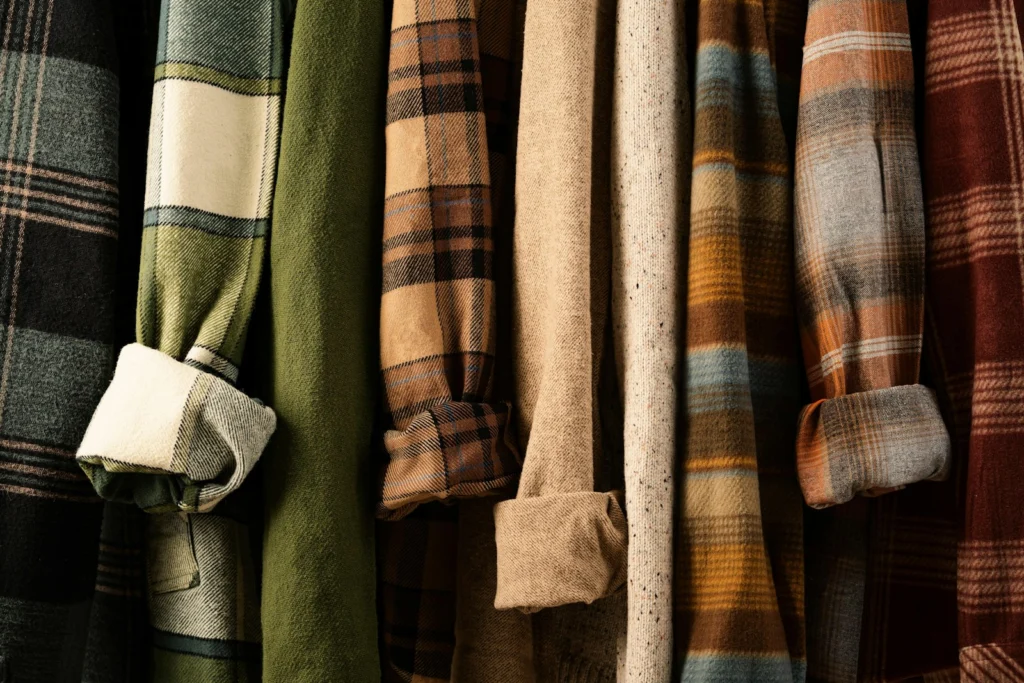
And when it’s cool enough, add a layer. An unbuttoned overshirt, a hoodie, a light jacket, or a blazer covers a gun on your waist with almost no effort.
Dress for your day, not for the range
What works depends on where you’re headed. Here’s how it tends to shake out.
| Your day | What tends to work | Watch out for | Read next |
|---|---|---|---|
| Office or business casual | An untucked button-down with some structure, or a blazer or quarter-zip over a tucked shirt. A gun belt that looks like a dress belt. | Thin dress shirts, taking the jacket off at your desk, and your employer’s weapons policy (check it first). | Carrying at work |
| Weekend casual | A tee under an open flannel or overshirt, with jeans that have a little stretch. | Tight tees worn on their own. | Carry clothing that looks like streetwear |
| Gym clothes and joggers | Joggers or shorts made for carry, with a waistband built to hold a holster. | Regular elastic waistbands. Most can’t hold a holster up. | Carry joggers and shorts |
| Summer heat | A looser tee or short-sleeve button-up in a darker color or a pattern. Some carriers switch to a smaller gun for the season. | Thin, light-colored shirts. | How to stop printing |
| Winter layers | Almost anything. Coats hide a lot. | Getting to the gun under a zipped coat, and what shows when the coat comes off indoors. | Appendix vs. strong-side carry |
What about your build?
Body shape changes the math, and it’s the main reason one person’s perfect setup is another person’s bulge.
- Slimmer builds tend to have less natural cover, so fabric weight, pattern, and a layer do more of the work. A smaller pistol can help too.
- Bigger builds often find that where the gun sits matters more than what’s covering it. Shirts that hang straight from the chest work in your favor.
- Women’s cuts tend to be more fitted, with shorter hems and often no sturdy belt loops, so the options look different: longer tops, open layers, belly bands, carry leggings, or a bag made for carry.
Carry position is a big part of this. Our appendix vs. strong-side guide breaks down which position tends to suit which body and which day.
Bags are part of the outfit
Sometimes the clothes just won’t cooperate: a dress with no waistband, gym shorts, a suit you can’t alter. That’s when people look at off-body carry in a backpack, sling, or waist pack. It comes with its own ground rules, starting with never letting the bag out of your control, so read our concealed carry bags guide before you go that route.
The same thinking applies to everything else in your pockets. A flashlight, a knife, a wallet, and a phone all add bulk and lines of their own. Our urban EDC guide covers what’s worth carrying every day and how to build the kit around your gun.
The 60-second mirror test
Before a new outfit leaves the house, test it.
- Stand side-on to a mirror and look for an outline at the grip.
- Reach up like you’re grabbing something off a high shelf. Does the hem ride up over the gun?
- Bend at the waist like you’re tying a shoe. Does the grip poke out?
- Sit down, then stand back up. Did anything shift or show?
If it passes, wear it. If it doesn’t, change one thing (the belt, the holster height, the shirt) and test again. And any time your clothes change how you get to the gun, practice that draw unloaded at home, then at the range, before you count on it.
Where the law comes in
Clothing is also a legal question in some places. Whether accidentally showing your gun is a problem depends on where you are, and the rules on printing, exposure, and brandishing aren’t the same from state to state. Workplaces, transit, and plenty of buildings add rules of their own. Our concealed carry laws by city hub covers the places our readers carry most. We’re not lawyers and this isn’t legal advice, so check the current law where you carry.
Your city style library
Clothes and concealment
- Concealed carry clothing that looks like regular streetwear
- How to stop printing when you carry concealed
- Gun belts for concealed carry
Bags and everyday carry
Fit and position
Frequently asked questions
Do I need special clothing to carry concealed?
No. Most people can carry in clothes they already own once the belt and holster are right and the fit has a little room. Carry-specific clothing earns its place where regular clothes struggle, like joggers and gym shorts.
What colors hide a gun best?
Darker colors and patterns tend to hide an outline better than light solids. Fabric matters too, since a thin, clingy shirt can print in any color.
Is it illegal if my gun prints through my shirt?
That depends on the state, and sometimes the city. Our printing guide explains the difference between printing, flashing, and brandishing, and our carry law pages cover specific places. When in doubt, check the current law or talk to an attorney.
Find what works for you
Nobody gets this right on the first outfit. You’ll try a shirt that prints, a belt that digs, a jacket that’s perfect until July. That’s normal. Keep what works, drop what doesn’t, and build a rotation that fits your body and your city.
Ready for specifics? Start with our carry clothing picks, then browse the gear page for holsters, belts, and bags.
Sources
- Concealed Carry Do’s and Don’ts, Shooting Illustrated (NRA)
- I Carry Spotlight: Cover Garments, Shooting Illustrated (NRA)
Affiliate disclosure: Some links in this guide are affiliate links. If you buy through them, Urban Carry Info may earn a commission at no extra cost to you.